
Challenges and Breakthroughs in Multi-Cavity Preform Molds: Analysis of Meto‘s 48-Cavity Mold Design
Challenges and Breakthroughs in Multi-Cavity Preform Molds: Analysis of Meto‘s 48-Cavity Mold Design
As bottle packaging lines run faster, preform mold cavitation has steadily increased. 16 cavities became standard. Then 24. Then 32. Today, 48-cavity preform molds represent the new frontier for high-volume PET bottle production.
But higher cavitation brings serious challenges. More cavities mean more complexity in melt flow balance, cooling uniformity, alignment precision, and maintenance accessibility. A poorly designed 48-cavity mold will produce inconsistent preforms, wear unevenly, and create more problems than it solves.
Meto has successfully designed, manufactured, and delivered 48-cavity preform molds to customers across three continents. This article explains the key challenges of multi-cavity preform molds and how Meto‘s design breakthroughs address them.
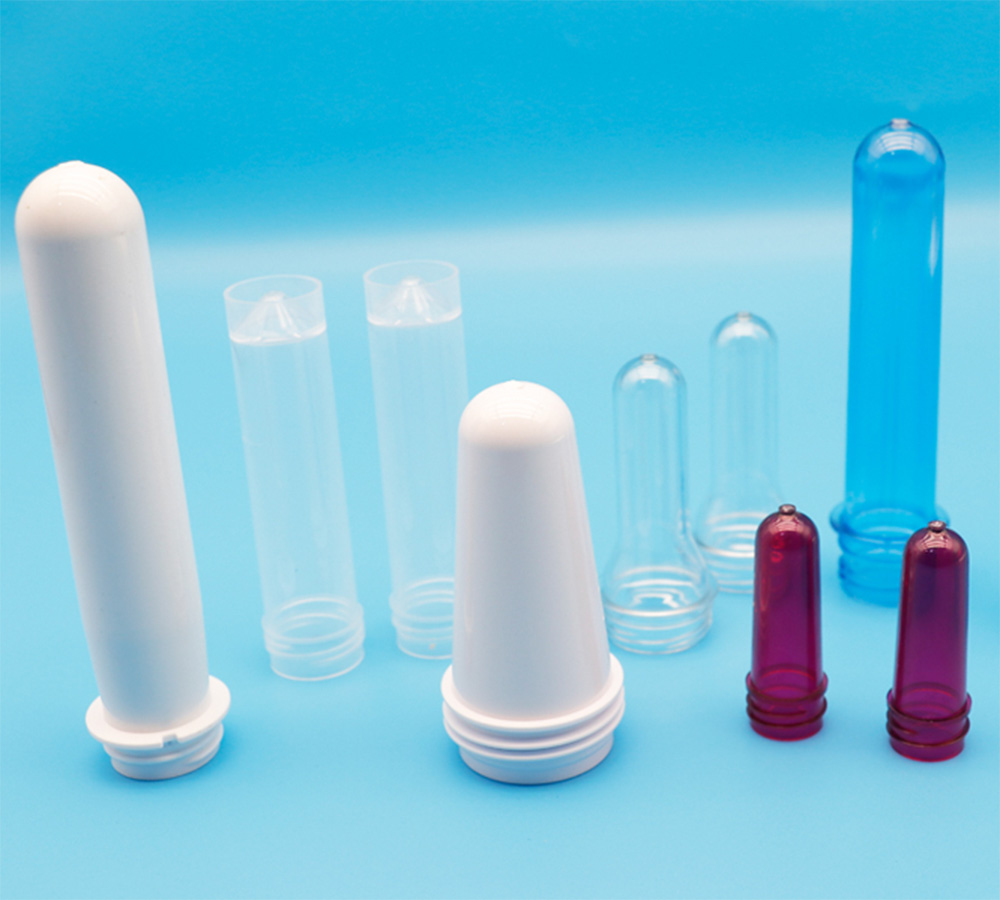
Part 1: The Core Challenges of 48-Cavity Preform Molds
Before discussing solutions, it is important to understand what makes 48-cavity molds difficult.
1.1 Melt Flow Balance
With 48 cavities, the hot runner system must deliver the same amount of molten PET to each cavity at the same temperature, pressure, and speed. Any imbalance causes:
Cavity-to-cavity weight variation (some preforms too heavy, some too light)
Inconsistent filling (some cavities pack out early, others late)
Non-uniform orientation (affects final bottle strength)
The magnitude of the challenge: At 48 cavities, even a 1% variation in fill creates significant material waste and bottle quality issues.
1.2 Cooling Uniformity
Cooling accounts for 60–80% of the total preform cycle time. But cooling is not just about speed — it must be uniform across all 48 cavities.
Challenges include:
Hot spots that prolong cycle time (waiting for the slowest cavity)
Uneven cooling that causes warpage or dimensional variation
Neck finish cooling that affects cap sealing performance
With 48 cavities, a cooling channel that works well for 16 cavities may fail completely when scaled up.
1.3 Alignment and Stability
A 48-cavity preform mold is large and heavy. The two mold halves must close perfectly aligned every cycle. Misalignment causes:
Flash on the preform neck finish
Premature wear on guide components
Inconsistent ejection
The larger the mold, the more deflection potential. Without proper reinforcement, the mold plates can bow under clamping force.
1.4 Maintenance Accessibility
More cavities mean more potential failure points. A 48-cavity mold that is difficult to maintain will cause excessive downtime. Maintenance challenges include:
Reaching inner cavities for cleaning or repair
Changing worn components without complete disassembly
Diagnosing which cavity is causing a problem
Part 2: Meto‘s Breakthrough Solutions for 48-Cavity Molds
Meto has addressed each of these challenges through specific design and manufacturing approaches.
2.1 Hot Runner Balance — Precision Flow Control
The breakthrough: Meto uses a sequential valve gate hot runner system with individually adjustable valve pin timing.
Unlike simple open-drop systems, Meto‘s valve gate system allows fine-tuning of each cavity‘s fill. The result:
Cavity-to-cavity weight variation ≤0.4%
Balanced filling across all 48 cavities
Consistent melt temperature (±2°C across all drops)
How it works:
Computer flow simulation optimizes runner layout before manufacturing
Valve pins open in sequence to compensate for distance from the main channel
Individual nozzle heaters maintain uniform temperature
Pressure sensors (optional) provide real-time fill data
Customer result: A customer running a 48-cavity Meto mold measured 0.32% weight variation — significantly better than the 0.8–1.2% they experienced with their previous 32-cavity molds from another supplier.
2.2 Conformal Cooling — Uniform Temperature, Faster Cycles
The breakthrough: Meto designs conformal cooling channels that follow the preform contour, especially in the critical neck finish area.
Traditional cooling uses straight-drilled channels that maintain uneven distance from the cavity surface. Meto‘s conformal channels:
Maintain a consistent 10–12mm distance from the cavity surface
Achieve turbulent flow (Reynolds number >10,000) in all channels
Produce cavity-to-cavity temperature variation ≤3°C
Specific design features for 48-cavity molds:
| Zone | Cooling Approach | Benefit |
|---|---|---|
| Neck finish | Independent spiral conformal channel | Critical for cap sealing, fastest cooling |
| Shoulder | Conformal following the expanding diameter | Prevents warpage at transition |
| Body | High-turbulence straight channels with baffles | Uniform cooling across long straight section |
| Bottom | Pin-point cooling with separate return | Avoids overcooling before ejection |
Customer result: A 48-cavity Meto mold achieved a 9.2-second cycle for a 21g preform — comparable to 32-cavity molds from the same customer‘s line.
2.3 Robust Structural Design — Stability at Scale
The breakthrough: Meto uses finite element analysis (FEA) to optimize plate thickness and rib placement for 48-cavity molds.
A 48-cavity preform mold has significant mass. Under clamping force, plates can deflect. Meto‘s structural design includes:
Thicker plates than industry average (20–30% thicker)
Strategic ribbing between cavity pockets
Oversized support pillars between plates
Four hardened guide pillars (40mm diameter on 48-cavity molds)
Deflection results from FEA analysis:
Maximum plate deflection under 200 tons clamping force: <0.03mm
Guide pillar deflection: <0.01mm at full clamp
This stability ensures consistent pinch-off and prevents flash, even after millions of cycles.
2.4 Maintenance-Friendly Design — Accessible When Needed
The breakthrough: Meto designs 48-cavity molds with modular maintenance access.
High cavitation often means poor access to inner cavities. Meto addresses this with:
Quick-change cavity inserts – Individual cavities can be removed without pulling the mold from the machine
Accessible cooling manifolds – Each cavity has an individual shutoff valve; manifolds are externally mounted
Standardized wear parts – Guide bushings, ejector pins, and hot runner nozzles are common across all cavities
Cavity identification – Every cavity is numbered; documentation maps each cavity to its location
Result: A full cleaning and inspection of a 48-cavity Meto mold takes 4–6 hours — not a full shift. Replacing a single cavity insert takes 15 minutes.
Part 3: Design Specifications — Meto 48-Cavity Preform Mold
| Parameter | Meto Specification |
|---|---|
| Cavities | 48 |
| Neck finish | PCO 1881, PCO 1810, 38mm, or custom |
| Preform weight range | 10g – 35g (typical) |
| Center distance | 38mm – 45mm (depending on preform size) |
| Steel grade (cavities) | 1.2343 (H11) standard; 1.2083 for rPET |
| Heat treatment | In-house vacuum heat treatment (48–52 HRC) |
| Surface treatment | Optional plasma nitriding (1000+ HV) |
| Hot runner type | Valve gate, sequential control |
| Cooling | Conformal in neck and shoulder; high-turbulence in body |
| Guide system | 4 pillars, 40mm diameter, hardened (58–62 HRC) |
| Plate material | DIN 1.2311 or 1.1730, stress-relieved |
| Overall dimensions | Approximately 800mm × 600mm × 400mm (varies by neck finish) |
| Weight | 800–1200 kg (depending on configuration) |
Part 4: Performance Data — What Customers Actually Achieve
The following data is compiled from three customers running Meto 48-cavity preform molds for different applications.
| Metric | Customer A (Water) | Customer B (CSD) | Customer C (Juice) |
|---|---|---|---|
| Preform weight | 18g | 24g | 21g |
| Neck finish | PCO 1810 | PCO 1881 | 38mm |
| Cycle time | 8.7 seconds | 10.2 seconds | 9.5 seconds |
| Weight variation (cavity-to-cavity) | 0.35% | 0.41% | 0.38% |
| Length variation (cavity-to-cavity) | 0.18mm | 0.22mm | 0.20mm |
| Reject rate (preform stage) | 0.5% | 0.7% | 0.6% |
| Projected mold life | 6–8 million cycles | 5–7 million cycles | 6–7 million cycles |
| Daily output (preforms) | 178,000 | 152,000 | 163,000 |
Key takeaway: Consistent performance across different applications, with weight variation consistently below 0.45% and reject rates under 0.7%.
Part 5: Comparison — 48-Cavity Meto Mold vs. Typical 32-Cavity Mold
Many customers upgrading from 32-cavity to 48-cavity ask: is the increased complexity worth it?
| Metric | Typical 32-Cavity Mold | Meto 48-Cavity Mold | Difference |
|---|---|---|---|
| Output per cycle | 32 preforms | 48 preforms | +50% |
| Machine utilization | Baseline | +50% more output per hour | Major gain |
| Weight variation | 0.6–1.0% typical | 0.35–0.45% | Better |
| Cycle time (same preform) | Baseline | Same or slightly slower (+0.5 sec max) | Minimal penalty |
| Mold price | Baseline | Approximately +40–50% | Higher initial cost |
| Output per dollar (mold cost) | Baseline | Higher | Better ROI |
| Maintenance complexity | Moderate | Higher (more cavities) | Requires skilled technicians |
ROI calculation example (Customer A, water bottles):
| Factor | 32-Cavity Mold (baseline) | 48-Cavity Meto Mold |
|---|---|---|
| Mold price | $X | 1.45X |
| Output increase | — | +50% |
| Annual additional output value | — | $180,000 (estimated) |
| Mold payback period | — | 6–9 months |
For high-volume lines, the 48-cavity upgrade pays for itself quickly through increased output.
Part 6: Application Suitability — Is 48 Cavities Right for You?
A 48-cavity preform mold is not the right choice for every factory. Consider the following:
Good Candidates for 48-Cavity Molds:
Annual preform demand above 50 million units
Machines with sufficient clamping force (200+ tons) and platen size
Skilled maintenance technicians available
Stable production schedule (not frequent mold changes)
Single preform weight or narrow range
Poor Candidates for 48-Cavity Molds:
Annual preform demand under 15 million units
Older machines with limited platen size
Limited maintenance capability
Frequent preform weight changes
Meto‘s Recommendation:
If you currently run 24- or 32-cavity molds and your line is at capacity, upgrading to 48-cavity is likely a sound investment. If you have excess capacity on your current molds, lower cavitation may be more economical.
Meto offers free production analysis to help customers determine the optimal cavitation for their specific situation.
Part 7: Manufacturing Process — How Meto Builds 48-Cavity Molds
Building a 48-cavity preform mold requires exceptional process control. Meto‘s manufacturing sequence includes:
Step 1: Design and Simulation
3D modeling of complete mold assembly
Hot runner flow simulation (cavity-to-cavity balance)
Cooling CFD analysis (temperature uniformity)
FEA structural analysis (deflection under clamp)
Step 2: Steel Preparation
Certified 1.2343 steel from European or Asian mills
Ultrasonic testing for internal defects
Rough machining to within 2mm of final dimensions
Stress relieving (prevents distortion during final machining)
Step 3: Precision Machining
5-axis CNC machining of all 48 cavities
CMM inspection after rough and finish passes
Surface finish held to Ra 0.2–0.4μm
Step 4: Heat Treatment
In-house vacuum heat treatment (48–52 HRC)
Double tempering (reduces brittleness)
100% hardness testing on every cavity
Optional plasma nitriding for extreme wear applications
Step 5: Assembly and Testing
Hot runner installation and leak testing
Cooling circuit pressure testing
Alignment verification (four-pillar system)
Trial molding (100+ shots, sample measurement)
Step 6: Final Inspection and Documentation
Cavity-by-cavity weight report (trial molding)
CMM dimensional report
Thermal imaging report
Neck finish gauge certification
Total manufacturing lead time: 10–14 weeks for a 48-cavity mold (depending on complexity and current workload).
Conclusion: 48 Cavities Done Right
Multi-cavity preform molds offer tremendous productivity gains — but only if designed and manufactured correctly. The challenges of flow balance, cooling uniformity, structural stability, and maintenance access multiply with each additional cavity.
Meto‘s 48-cavity preform mold design addresses each challenge with proven engineering solutions: sequential valve gate hot runners for weight consistency, conformal cooling for uniform temperature, FEA-optimized structures for stability, and modular design for maintenance access.
For high-volume PET bottle producers, a Meto 48-cavity preform mold delivers:
50% more output per cycle than 32-cavity molds
Weight variation under 0.45%
Cycle times comparable to lower-cavitation molds
Projected life of 6–8 million cycles
If your production line demands high output and consistent quality, Meto‘s 48-cavity preform mold is ready to deliver.

Ruby
We can provide you with high-quality PET preform molds,cap molds,and blow molding machines.Looking forward to communicating and cooperating with you!
Helpline and Support
008613757660057