
Why More Bottle Packaging Factories Are Choosing Both Meto Preform Molds and Cap Molds Together
Why More Bottle Packaging Factories Are Choosing Both Meto Preform Molds and Cap Molds Together
For years, bottle packaging factories followed a common practice: buy preform molds from one supplier and cap molds from another. The logic seemed sound — each supplier specialized in their own product.
But this approach has hidden costs. Mismatched neck finishes. Cap sealing problems traced back to preform dimensions. Finger-pointing between suppliers when rejects occur. And no single supplier held accountable for the complete result.
Today, more bottle packaging factories are discovering a better way: choosing both preform molds and cap molds from Meto. This article explains why this integrated approach reduces rejects, simplifies troubleshooting, and lowers total cost.
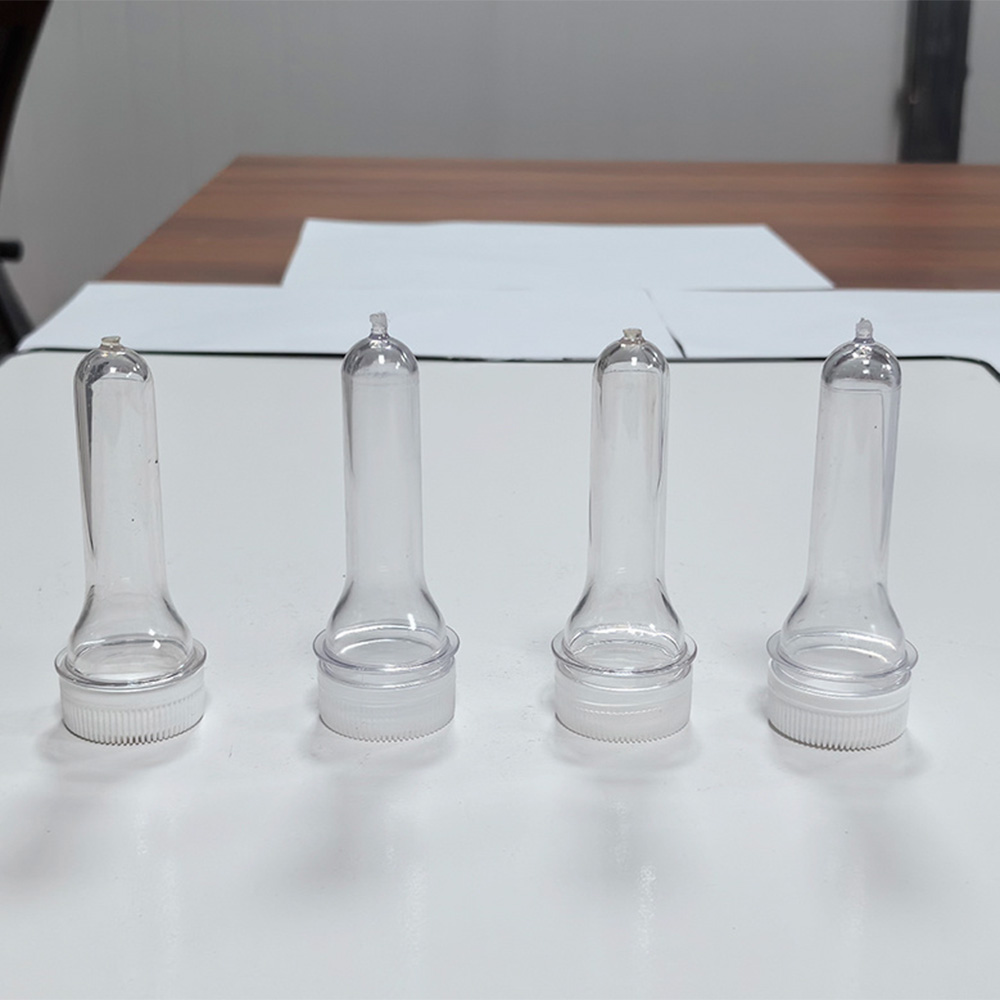
Part 1: The Hidden Problem with Separate Suppliers
1.1 The Interface That Often Fails
The preform neck finish and the cap must mate perfectly. The threads must align. The sealing surface must match. The tamper-evident band must engage correctly.
When preform and cap molds come from different suppliers, each makes assumptions about the other’s dimensions. Small differences — 0.05mm here, 0.03mm there — add up. The result:
Caps that leak during transport
Caps that are too tight (consumer complaints)
Caps that are too loose (safety concerns)
Tamper-evident bands that break too early or too late
High reject rates at the capping station
1.2 The Blame Game
When problems occur, who is responsible? The preform mold supplier blames the cap mold supplier. The cap mold supplier blames the preform mold supplier. The factory is caught in the middle, losing production time while suppliers argue.
1.3 Duplicated Effort and Cost
Managing two suppliers means:
Two design reviews
Two purchase orders
Two shipping arrangements
Two technical support contacts
Two spare parts inventories
This duplication wastes time and money.
Part 2: The Meto Integrated Solution
2.1 One Supplier, One Interface, One Responsibility
When Meto supplies both the preform mold and the cap mold, the neck finish interface is designed as a single system — not two separate components.
Meto engineers control:
Thread profile (matching exactly between preform and cap)
Sealing surface geometry (inner seal, outer seal, or both)
Tamper-evident band groove dimensions
Draft angles and radii
There is no guessing. No assumptions. No “fit issues” discovered during production.
2.2 Compatibility Guarantee
Meto provides a written neck finish compatibility guarantee with every paired preform and cap mold order:
“The caps produced from Meto cap molds will seal correctly on preforms produced from Meto preform molds, with application torque within specified range and zero leakage under standard transport and storage conditions.”
This guarantee is backed by actual testing — Meto runs trial preforms and trial caps together before shipping either mold.
2.3 Coordinated Tolerances
When two suppliers each hold tolerances, worst-case stack-up can exceed acceptable limits. Meto uses coordinated tolerancing:
| Feature | Separate Suppliers (typical) | Meto Integrated |
|---|---|---|
| Thread pitch diameter | ±0.03mm (each) | ±0.02mm (coordinated) |
| Sealing surface concentricity | ±0.05mm (each) | ±0.03mm (coordinated) |
| Tamper-evident band clearance | Assumed | Measured and verified |
The result: guaranteed fit, not just “probably fits.”
Part 3: Technical Benefits of Choosing Preform and Cap Molds Together
3.1 Optimized Sealing Performance
Different beverages require different sealing strategies:
| Beverage Type | Sealing Requirement | Meto Approach |
|---|---|---|
| Carbonated soft drinks | High pressure, gas retention | Linerless sealing membrane + precise preform neck angle |
| Still water | Standard sealing | Outer seal with consistent compression |
| Hot-fill juices | Temperature resistance | Specialized preform neck design with cap venting |
| Oils and sauces | Chemical resistance | Sealing materials matched to both preform and cap surfaces |
Meto designs the preform neck and cap sealing system together for your specific application.
3.2 Consistent Torque Performance
Capping torque must be consistent — not too high (difficult to open), not too low (leaks). Variation comes from:
Preform neck finish variation
Cap thread variation
Sealing surface interaction
When Meto supplies both molds, torque variation is significantly lower:
| Metric | Separate Suppliers | Meto Integrated |
|---|---|---|
| Application torque variation | ±0.15 – 0.20 Nm | ±0.08 – 0.12 Nm |
| Removal torque variation | ±0.10 – 0.15 Nm | ±0.05 – 0.08 Nm |
This consistency improves consumer experience and reduces returns.
3.3 Tamper-Evident Band Reliability
The tamper-evident band must break cleanly when the cap is first opened — but not break during transport or capping.
Meto coordinates:
Band groove depth on preform
Band hook geometry on cap
Bridge thickness and spacing
Results from paired Meto molds: tamper-evident break rates above 99.5% (clean break, no debris).
3.4 Faster Line Validation
When preform and cap molds arrive from different suppliers, the factory must validate them separately — and then validate the combination.
With Meto supplying both:
Preform and cap molds are trial-molded together at Meto’s facility
The factory receives pre-validated components
Line validation time is reduced by 40–60%
Part 4: Operational Benefits
4.1 Single Point of Contact
One salesperson. One engineer. One invoice. One shipping notification. One technical support line.
Factory managers spend less time coordinating suppliers and more time running production.
4.2 Consolidated Spare Parts
Meto uses common guide bushings, ejector pins, and cooling fittings across preform and cap molds. A single spare parts kit supports both mold types. Less inventory. Less confusion.
4.3 Coordinated Delivery
Preform and cap molds are needed at the same time — a line cannot start without either one. Separate suppliers often deliver weeks apart, forcing the factory to wait.
Meto coordinates manufacturing schedules so both molds ship together or on a customer-specified timeline.
4.4 Simplified Troubleshooting
When a problem occurs, there is no debate about which supplier is responsible. Meto owns the complete neck finish interface. One team diagnoses. One team fixes. No finger-pointing.
Part 5: Real Customer Example
Customer: Regional beverage brand in Southeast Asia
Previous situation: Preform molds from Supplier A, cap molds from Supplier B
Problem: 3.2% reject rate at capping station — leakage, difficult opening, tamper-evident band failures
Investigation findings:
Preform neck finish pitch diameter at high end of tolerance
Cap thread pitch diameter at low end of tolerance
Combined stack-up caused interference (tight caps, band breakage)
Resolution:
Each supplier blamed the other
Factory spent 4 months negotiating, retooling, retesting
Switch to Meto for both molds:
| Metric | Before (two suppliers) | After (Meto both) |
|---|---|---|
| Capping station reject rate | 3.2% | 0.4% |
| Torque variation | ±0.22 Nm | ±0.10 Nm |
| Tamper-evident failure rate | 1.8% | 0.2% |
| Line validation time (new mold set) | 6 weeks | 2 weeks |
| Supplier management time | 4–6 hours/week | 1 hour/week |
Customer comment: “The cost savings from lower rejects paid for the new Meto molds in 7 months. And we stopped wasting time managing two suppliers.”
Part 6: Which Factories Benefit Most from Choosing Both Molds from Meto?
| Factory Type | Benefit Level | Reason |
|---|---|---|
| New line startup | High | One supplier simplifies commissioning |
| High-speed lines (>500 caps/min) | High | Torque consistency critical |
| Multiple bottle sizes, same neck finish | High | Coordinated tolerances across sizes |
| Export-oriented (long supply chains) | High | Sealing reliability reduces transport claims |
| Factories with frequent cap changes | Medium | Quick-change cap molds paired with stable preform molds |
| Very low volume, manual lines | Low | Integration benefits less critical |
For most medium-to-high volume bottle packaging factories, the integrated approach delivers clear ROI.
Part 7: How Meto Ensures Preform-to-Cap Compatibility
7.1 Design Phase
Preform neck finish and cap thread designed simultaneously
3D assembly model verified for interference
Mold flow analysis on both components
Sealing surface compression simulation
7.2 Manufacturing Phase
Same metrology equipment measures both mold types
Neck finish gauges calibrated to customer cap specifications
Cap thread gauges calibrated to customer preform specifications
7.3 Testing Phase
Trial preforms and trial caps produced on separate machines
Caps applied to preforms using customer-specified capping equipment
Torque testing (application and removal)
Leak testing (vacuum or pressure decay)
Tamper-evident band testing
7.4 Documentation
Every paired mold order receives a Neck Finish Compatibility Report including:
Thread profile measurements (both components)
Sealing surface dimensions
Torque test results (20 samples minimum)
Leak test results
Tamper-evident break test results
Part 8: Cost Comparison — Separate Suppliers vs. Meto Integrated
| Cost Factor | Separate Suppliers | Meto Integrated |
|---|---|---|
| Preform mold price | Market price | Market price |
| Cap mold price | Market price | Market price |
| Design review hours | 2x (one per supplier) | 1x |
| Compatibility testing | Factory does it | Meto does it |
| Line validation time | 4–6 weeks | 2–3 weeks |
| Reject rate (capping) | 1.5–3.0% typical | 0.3–0.8% typical |
| Troubleshooting time per issue | 2–5 days (finger-pointing) | 1–2 days |
| Spare parts inventory | Two sources, different standards | One source, common standards |
Typical first-year savings (medium-volume factory): $25,000 – $60,000 from lower rejects alone, plus faster validation and reduced management overhead.
Conclusion: Integration Is the Future
Bottle packaging is a system — preform, blow bottle, cap, fill, seal. Treating preform and cap molds as independent components creates unnecessary risk and cost.
More factories are discovering that choosing both preform molds and cap molds from Meto delivers better sealing, consistent torque, reliable tamper-evident performance, faster validation, and simpler operations.
One supplier. One interface. One guarantee. Why make it more complicated?
If you are planning a new preform mold, a new cap mold, or both — Meto is ready to supply them as an integrated system.

Ruby
We can provide you with high-quality PET preform molds,cap molds,and blow molding machines.Looking forward to communicating and cooperating with you!
Helpline and Support
008613757660057