
Cold Half Mold vs Hot Half Mold: How to Choose Between Meto's Two Preform Mold Solutions
Cold Half Mold vs Hot Half Mold: How to Choose Between Meto's Two Preform Mold Solutions
When you buy a preform mold, one of the first decisions you face is whether to choose a cold half mold or a hot half mold. These terms describe how the mold manages the runner system, the channels that deliver molten PET from the injection machine to the cavities.
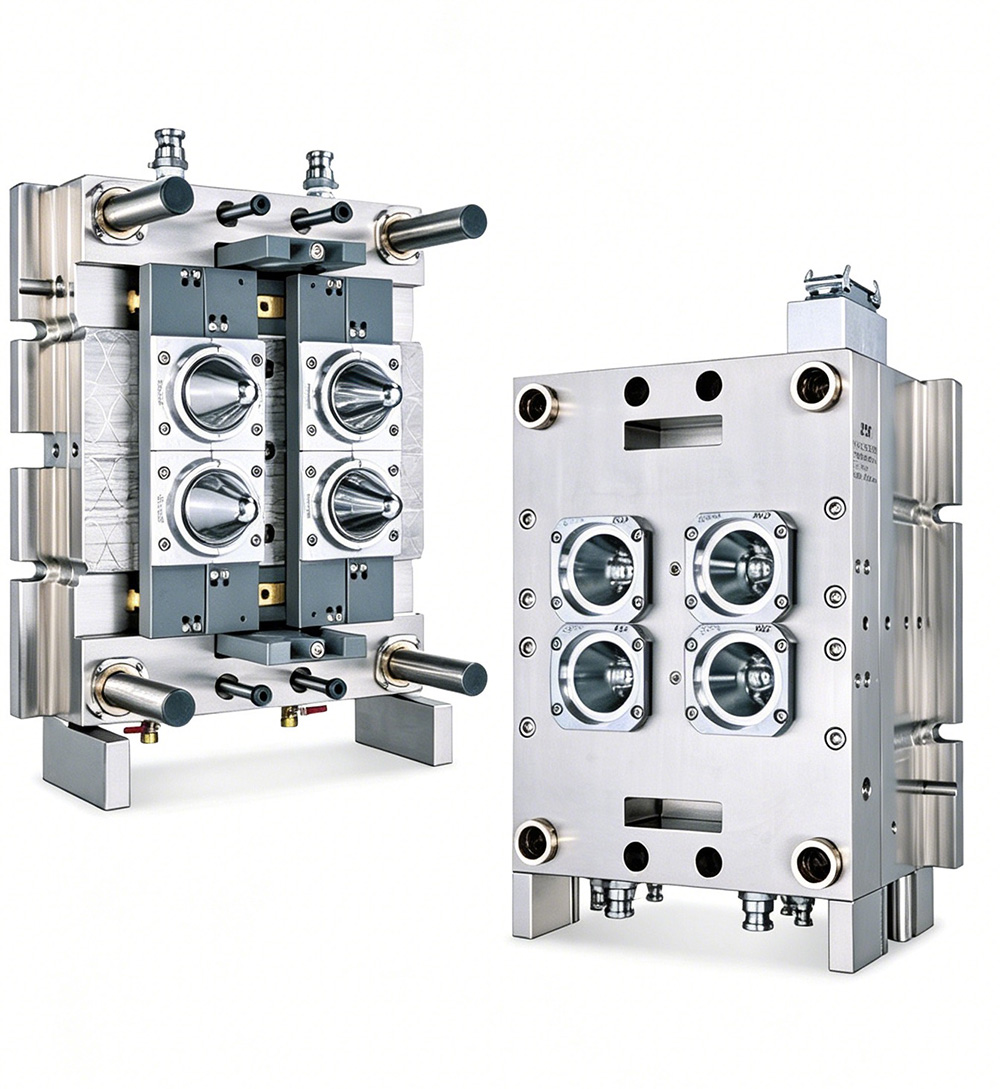
The cold half mold uses a cold runner. The runner solidifies with each cycle and is ejected as waste. It can be reground and reused.
The hot half mold uses a hot runner. The runner stays molten and remains in the mold. Only the preforms are ejected. There is no runner waste.
Each approach has advantages and disadvantages. This article explains both systems in plain terms. It compares cost, efficiency, quality, and maintenance. It helps you choose the right system for your production needs.
Part 1: Cold Half Mold Explained
A cold half mold has a runner system that is not heated. The molten PET flows from the injection machine nozzle through a sprue and runner channels to each cavity. The runner is part of the molded part.
After injection and cooling, the mold opens. The preforms and the runner are ejected together as one piece. The runner is a solid plastic tree that connects all the preforms.
An operator or robot separates the preforms from the runner. The runner is ground into regrind. The regrind is mixed with virgin PET and reused. Typical regrind ratio is 10 to 30 percent.
Part 2: Hot Half Mold Explained
A hot half mold has a heated runner system. The manifold contains heaters and temperature controllers. The molten PET remains liquid inside the mold. It does not solidify.
At the end of each cycle, only the preforms are ejected. The runner stays molten. It becomes the starting point for the next cycle. There is no runner waste to separate or regrind.
Most hot half molds use valve gates. A valve pin opens and closes to control the flow to each cavity. This provides precise control over filling and gate quality.
Part 3: The Running Cost Difference
The most obvious difference is material waste.
A cold half mold produces runner waste with every cycle. For a 16 cavity preform mold producing 18 gram preforms, the runner weight is typically 30 to 50 grams per cycle. Over 1 million cycles, this is 30 to 50 tons of PET. At 1,000 US dollars per ton, the waste cost is 30,000 to 50,000 US dollars per million cycles.
The runner material can be reground and reused. But regrind has limits. It degrades with each reprocessing cycle. High regrind ratios affect preform quality and bottle strength.
A hot half mold produces no runner waste. Every gram of PET becomes a preform. The material savings over the mold life can be substantial.
Part 4: The Investment Difference
Cold half molds cost less upfront. They have no heaters, no temperature controllers, and no complex manifold. The design is simpler. The manufacturing cost is lower.
For a 16 cavity preform mold, a cold half mold typically costs 18,000 to 25,000 US dollars. A hot half mold with valve gates typically costs 28,000 to 40,000 US dollars.
The hot half mold costs 10,000 to 15,000 US dollars more. The additional investment must be justified by material savings, faster cycles, or better quality.
Part 5: Cycle Time Difference
Cycle time is another important difference.
A cold half mold must cool the runner before ejection. The runner is thick. It cools slower than the preforms. The cycle time is determined by the runner cooling time, not the preform cooling time.
A hot half mold does not need to cool the runner. Only the preforms must cool. Cycle time is shorter. Typical cycle time reduction is 15 to 30 percent.
For a high volume producer, faster cycles mean more output from the same machine. This can be a significant advantage.
Part 6: Quality Difference
The quality of preforms is affected by the runner system.
Cold half molds have a visible gate mark where the runner connects to the preform. This gate mark is usually at the bottom of the preform. It is acceptable for most applications. For cosmetic or high clarity bottles, the gate mark may be visible.
Cold half molds are more sensitive to process variation. Runner geometry and cooling affect fill balance. Cavity to cavity weight variation is typically 0.6 to 1.0 percent.
Hot half molds with valve gates produce clean gate marks. The gate is flat and flush with the preform surface. No gate trimming is needed.
Hot half molds provide better fill balance. Valve gate timing can be adjusted for each cavity. Cavity to cavity weight variation is typically 0.3 to 0.5 percent.
Part 7: Color Change Difference
Color change frequency affects the choice.
Cold half molds are easier to color change. The runner and preforms are ejected with each cycle. To change color, simply run the new material until the old color is purged. This takes 10 to 30 minutes.
Hot half molds are harder to color change. The hot runner contains molten material that must be purged. This takes longer. Color changes on a hot half mold can take 30 to 90 minutes. For frequent color changes, the cold half mold is more efficient.
Part 8: Maintenance Difference
Maintenance requirements differ between the two systems.
Cold half molds are simpler to maintain. There are no heaters, thermocouples, or valve pins to replace. Maintenance focuses on guide bushings, ejector pins, and cooling channels. Spare parts are less expensive.
Hot half molds are more complex. Heaters, thermocouples, and valve pins require periodic replacement. The manifold must be inspected for leaks and wear. Maintenance requires skilled technicians. Spare parts are more expensive.
However, the hot half mold has fewer cycle interruptions for runner separation. The automatic operation reduces labor and improves consistency.
Part 9: Machine Compatibility
Machine requirements differ between the two systems.
Cold half molds fit most injection molding machines. No special hot runner control is needed. The machine only needs standard temperature control for the barrel and nozzle.
Hot half molds require a machine with hot runner control capability. The control system must manage heaters and thermocouples for each zone. Additional electrical connections are needed. Not all machines have this capability.
Before choosing a hot half mold, verify that your machine supports it. If not, you may need to upgrade your machine or choose a cold half mold.
Part 10: Which Is Right for You?
Use this decision guide to choose.
Choose a cold half mold if you have annual volume under 10 million preforms, frequent color changes more than once per week, limited machine hot runner capability, budget constraints on upfront investment, or limited maintenance technical skills.
Choose a hot half mold if you have annual volume over 15 million preforms, stable production with few color changes, machine with hot runner control capability, longer term view of total cost, or experienced maintenance technicians.
For volumes between 10 and 15 million preforms per year, calculate the ROI for both options. The payback period for the hot half mold is typically 6 to 18 months.
Part 11: Cost Comparison Over 5 Million Cycles
Here is a comparison for a 16 cavity mold running 5 million cycles.
Cold half mold upfront cost is 22,000 US dollars. Runner waste at 40 grams per cycle is 200 tons over 5 million cycles. At 1,000 US dollars per ton, waste cost is 200,000 US dollars. Regrind processing cost at 100 US dollars per ton is 20,000 US dollars. Maintenance cost over 5 million cycles is 10,000 US dollars. Total 5 year cost is 252,000 US dollars.
Hot half mold upfront cost is 34,000 US dollars. Runner waste is zero. Regrind processing cost is zero. Maintenance cost over 5 million cycles is 15,000 US dollars. Total 5 year cost is 49,000 US dollars.
The hot half mold saves 203,000 US dollars over 5 million cycles. The savings are dramatic.
But this calculation assumes that you recycle the runner waste at its full value. In reality, regrind has less value than virgin material. The savings of the hot half mold are even greater.
Part 12: Real Customer Examples
A water bottler in Southeast Asia produces 20 million preforms per year. They run the same preform all year. No color changes. They chose a hot half mold. The material savings paid for the additional investment in 8 months.
A contract preform molder in Mexico produces 5 million preforms per year. They run 5 different colors. They change colors weekly. They chose a cold half mold. The lower upfront cost and faster color changes fit their business model.
A juice bottle producer in Europe produces 15 million preforms per year. They run two colors. They chose a hot half mold with quick purging capability. They accept the longer color change time for the material savings.
Part 13: Meto Cold Half Mold Features
Meto cold half molds include several features.
Precision machined runner channels for balanced fill. Standard guide bushing system for reliable alignment. Accessible cooling channels for easy cleaning. Standard ejector system for consistent preform release. Full documentation including trial molding report.
Meto cold half molds are designed for reliable, cost effective production.
Part 14: Meto Hot Half Mold Features
Meto hot half molds include advanced features.
Balanced hot runner manifold with flow simulation. Individual nozzle temperature control for each cavity. Sequential valve gate timing for weight consistency. Conformal cooling in neck and shoulder zones. Quick connect electrical plugs for easy installation. Full documentation including trial molding report.
Meto hot half molds are designed for efficiency and quality.
Part 15: Making the Decision
The choice between cold half and hot half is not about which is better. It is about which fits your production requirements.
If your volume is low, your changes are frequent, and your budget is tight, cold half is the practical choice.
If your volume is high, your production is stable, and you want the lowest cost per preform, hot half is the smart choice.
Meto can help you evaluate both options. We provide cost calculations for your specific volume and material costs. We recommend the system that gives you the best total economics.

Ruby
We can provide you with high-quality PET preform molds,cap molds,and blow molding machines.Looking forward to communicating and cooperating with you!
Helpline and Support
008613757660057