
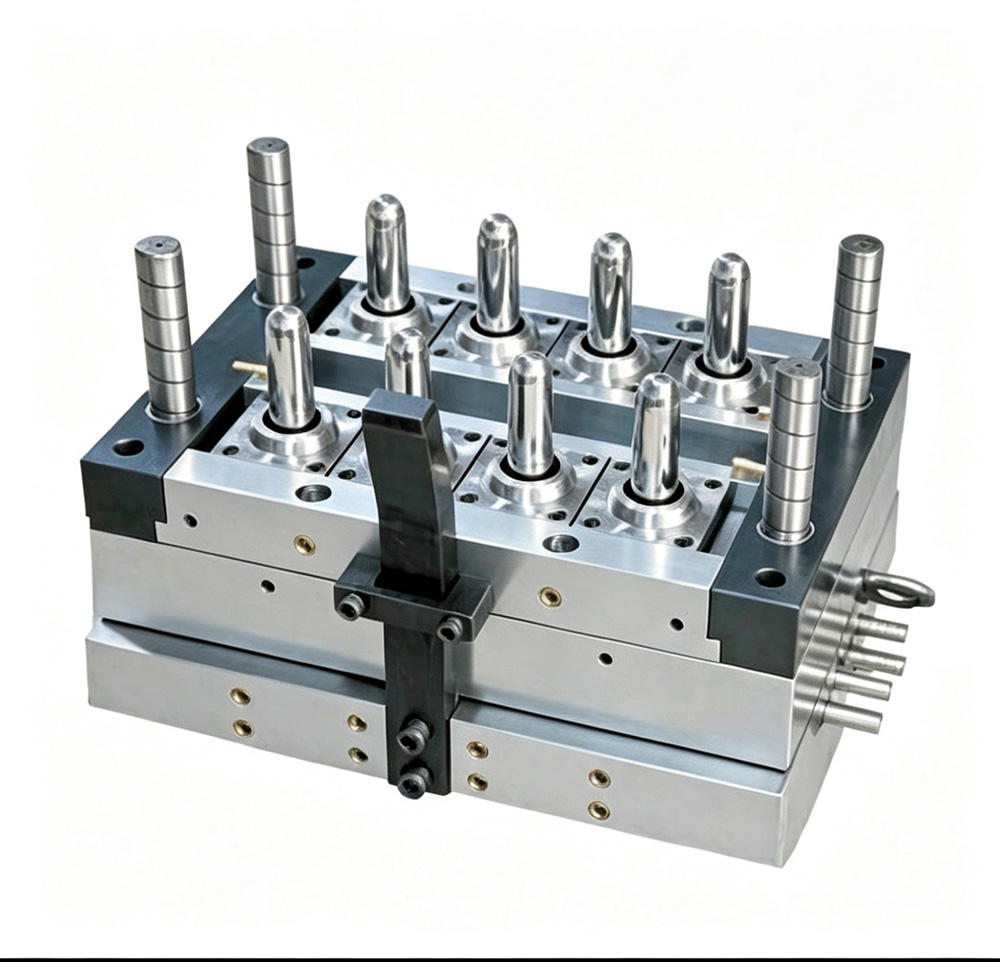
Every mold requires maintenance. Bushings wear. Cooling channels scale. Surfaces lose their polish. Threads wear. Ejector pins bend. These are not failures. They are normal wear.
But normal wear costs money. Many factories do not track maintenance costs carefully. They buy spare parts when needed. They pay for repairs when problems occur. They do not budget for maintenance. They react rather than plan.
This article helps you calculate your annual mold maintenance cost. It breaks down the cost components. It shows typical costs for different mold types. It explains how Meto molds reduce maintenance costs over their lifetime.
Part 1: What Costs Are Included in Mold Maintenance
Mold maintenance includes several cost categories.
Spare parts are the most obvious cost. Bushings, ejector pins, springs, O rings, heaters, thermocouples, and valve pins all wear and need replacement.
Labor is another major cost. Technicians spend time inspecting, cleaning, lubricating, and repairing molds. Labor cost includes wages, benefits, and overhead.
Downtime is often the largest cost. When a mold is being maintained, the machine is not producing. Lost production has a real cost.
Refurbishment is major maintenance. After several million cycles, the mold needs repolishing, thread recutting, or other major work. Refurbishment is more expensive than routine maintenance.
Shipping and logistics apply when molds are sent to an external refurbisher. Shipping costs, insurance, and customs fees add up.
Part 2: Typical Spare Parts Costs by Mold Type
For a 32 cavity preform mold, typical annual spare parts costs include guide bushings at 500 to 1,000 US dollars per set. Ejector pins cost 300 to 600 US dollars per set. O rings and seals cost 100 to 200 US dollars. Hot runner heaters and thermocouples cost 500 to 1,500 US dollars depending on how many need replacement. Valve pins cost 800 to 2,000 US dollars if replacement is needed. Total annual spare parts cost is approximately 2,000 to 5,000 US dollars.
For a 48 cavity cap mold, typical annual spare parts costs include guide bushings at 600 to 1,200 US dollars. Ejector pins cost 400 to 800 US dollars. Unscrewing mechanism components cost 500 to 1,500 US dollars. Hot runner heaters and thermocouples cost 500 to 1,500 US dollars. Thread inserts cost 1,500 to 3,000 US dollars if replacement is needed. Total annual spare parts cost is approximately 3,000 to 7,000 US dollars.
For a 4 cavity blow mold, typical annual spare parts costs include guide bushings at 200 to 400 US dollars. Pinch off inserts cost 500 to 1,500 US dollars if replacement is needed. Cooling fittings cost 100 to 200 US dollars. Total annual spare parts cost is approximately 800 to 2,000 US dollars.
Part 3: Typical Labor Costs
Labor costs vary by region and skill level. Here are typical costs for a factory in a medium cost region.
Routine maintenance such as cleaning and lubrication takes approximately 2 to 4 hours per month per mold. At 30 US dollars per hour, this is 720 to 1,440 US dollars per year.
Minor repairs such as bushing replacement take approximately 4 to 8 hours per occurrence. At 30 US dollars per hour, this is 120 to 240 US dollars per occurrence. Typical occurrence is once or twice per year.
Major repairs such as ejector pin replacement or cavity polishing take approximately 8 to 16 hours. At 30 US dollars per hour, this is 240 to 480 US dollars per occurrence. Typical occurrence is once per year.
Total labor cost per mold is approximately 2,000 to 4,000 US dollars per year.
Part 4: Downtime Cost
Downtime is often the largest maintenance cost. When a mold is down for maintenance, the machine is not producing.
Calculate downtime cost as machine hour cost multiplied by downtime hours. Machine hour cost includes machine depreciation, energy, labor, and overhead. Typical machine hour cost for an injection molding machine is 50 to 150 US dollars per hour.
Routine maintenance downtime is approximately 4 hours per month or 48 hours per year. At 100 US dollars per hour, this is 4,800 US dollars per year.
Major repair downtime is approximately 8 to 24 hours per occurrence. At 100 US dollars per hour, this is 800 to 2,400 US dollars per occurrence. Typical occurrence is once per year.
Total downtime cost per mold is approximately 5,000 to 10,000 US dollars per year.
Part 5: Refurbishment Costs
Refurbishment is major maintenance performed after several million cycles.
For a 32 cavity preform mold, refurbishment costs include disassembly and cleaning at 500 to 1,000 US dollars. Cavity repolishing costs 1,000 to 2,000 US dollars. Neck finish recutting costs 1,500 to 3,000 US dollars. Bushing and ejector pin replacement costs 1,000 to 2,000 US dollars. Cooling channel cleaning costs 500 to 1,000 US dollars. Assembly and testing costs 1,000 to 2,000 US dollars. Total refurbishment cost is approximately 5,000 to 10,000 US dollars.
For a 48 cavity cap mold, refurbishment costs include disassembly and cleaning at 500 to 1,500 US dollars. Thread recutting costs 2,000 to 4,000 US dollars. Cavity repolishing costs 1,000 to 2,500 US dollars. Unscrewing mechanism rebuild costs 1,000 to 2,000 US dollars. Bushing and ejector pin replacement costs 1,000 to 2,000 US dollars. Assembly and testing costs 1,000 to 2,000 US dollars. Total refurbishment cost is approximately 6,000 to 12,000 US dollars.
For a 4 cavity blow mold, refurbishment costs include pinch off insert replacement at 1,000 to 2,500 US dollars. Cavity repolishing costs 800 to 1,500 US dollars. Cooling channel cleaning costs 300 to 600 US dollars. Total refurbishment cost is approximately 2,000 to 5,000 US dollars.
Refurbishment is typically performed every 3 to 5 million cycles. The cost is spread over the life of the mold.
Part 6: Total Annual Maintenance Cost Summary
For a 32 cavity preform mold running 5 million cycles per year, typical annual maintenance costs are as follows. Spare parts cost 3,000 to 5,000 US dollars. Labor cost 2,000 to 4,000 US dollars. Downtime cost 5,000 to 10,000 US dollars. Refurbishment cost amortized over 5 million cycles is 1,000 to 2,000 US dollars per year. Total annual maintenance cost is 11,000 to 21,000 US dollars.
For a 48 cavity cap mold running 5 million cycles per year, typical annual maintenance costs are as follows. Spare parts cost 4,000 to 7,000 US dollars. Labor cost 2,500 to 4,500 US dollars. Downtime cost 5,000 to 10,000 US dollars. Refurbishment cost amortized over 5 million cycles is 1,200 to 2,400 US dollars per year. Total annual maintenance cost is 12,700 to 23,900 US dollars.
For a 4 cavity blow mold running 2 million cycles per year, typical annual maintenance costs are as follows. Spare parts cost 1,000 to 2,000 US dollars. Labor cost 1,500 to 3,000 US dollars. Downtime cost 3,000 to 6,000 US dollars. Refurbishment cost amortized over 2 million cycles is 1,000 to 2,500 US dollars per year. Total annual maintenance cost is 6,500 to 13,500 US dollars.
Part 7: How Mold Quality Affects Maintenance Cost
High quality molds have lower maintenance costs than low quality molds.
A low quality preform mold may need bushing replacement every 1 million cycles. A Meto mold may need bushing replacement every 2 to 3 million cycles. Over 5 million cycles, the low quality mold requires 5 bushing replacements. The Meto mold requires 2 replacements. Spare parts cost is lower.
A low quality mold may have cooling channel scaling that requires frequent cleaning. A Meto mold with proper cooling design and corrosion resistant materials scales more slowly. Cleaning frequency is lower.
A low quality mold may have thread wear that requires early refurbishment. A Meto mold with proper steel and heat treatment wears more slowly. Refurbishment is needed later.
The result is that high quality molds have lower maintenance costs over their lifetime.
Part 8: Meto Design Features That Reduce Maintenance
Meto molds incorporate several design features that reduce maintenance cost.
Quick change cavity inserts allow replacement of worn cavities without removing the mold from the machine. This reduces downtime and labor.
Standardized components mean that guide bushings, ejector pins, and other wear parts are common across mold types. Spare parts inventory is simpler. Purchasing volume is higher, reducing unit cost.
Accessible cooling manifolds allow easy cleaning of cooling channels. Operators can flush channels without disassembling the mold.
Hardened guide components resist wear. Bushings and pins last longer. Replacement frequency is lower.
Premium steel and proper heat treatment resist wear and corrosion. Cavity life is longer. Refurbishment is needed later.
Part 9: Meto Maintenance Support
Meto provides maintenance support to help customers reduce maintenance costs.
The maintenance guide included with every mold shows lubrication schedules, cleaning procedures, and wear limits. Operators know exactly what to do and when.
Spare parts are available within 48 hours for standard wear parts. No waiting weeks for parts from Europe.
Refurbishment services are available from Meto. We perform the work and return the mold. Turnaround is typically 3 to 4 weeks.
Technical support is available by phone, email, and video call. We help diagnose problems before they become major repairs.
Part 10: Real Customer Maintenance Cost Comparison
Customer A in Southeast Asia operates 12 preform molds. Before switching to Meto, their annual mold maintenance cost averaged 18,000 US dollars per mold. After switching to Meto, their annual maintenance cost dropped to 12,000 US dollars per mold. The savings of 6,000 US dollars per mold times 12 molds equals 72,000 US dollars per year.
Customer B in South America operates 8 cap molds. Their previous supplier's molds required bushing replacement every 1 million cycles. Meto molds require bushing replacement every 2.5 million cycles. Spare parts cost dropped by 60 percent. Labor cost dropped by 40 percent. Total maintenance cost dropped from 15,000 US dollars per mold per year to 9,000 US dollars.
Customer C in Europe operates 6 blow molds. They used to send molds to an external refurbisher every 2 years. Meto molds go 4 years between refurbishments. Refurbishment cost per mold dropped from 6,000 US dollars every 2 years to 7,000 US dollars every 4 years. Annualized refurbishment cost dropped from 3,000 to 1,750 US dollars per mold.
Part 11: How to Reduce Your Mold Maintenance Cost
You can reduce maintenance cost with several actions.
First, track your maintenance cost. You cannot manage what you do not measure. Record every spare part purchase. Record every hour of maintenance labor. Record every hour of downtime. Calculate your annual maintenance cost per mold.
Second, use the recommended maintenance schedule. Do not wait for failures. Preventive maintenance is less expensive than emergency repairs.
Third, use quality spare parts. Cheap bushings wear faster. They may damage guide pins. Quality parts cost more but last longer.
Fourth, invest in high quality molds. The upfront cost is higher. The maintenance cost is lower. Over the mold life, the total cost is lower.
Fifth, consider Meto molds. Our design features reduce maintenance frequency and cost. Our support helps you maintain molds properly.
Part 12: Summary of Annual Maintenance Costs
For a 32 cavity preform mold, annual maintenance cost is 11,000 to 21,000 US dollars. For a 48 cavity cap mold, annual maintenance cost is 12,700 to 23,900 US dollars. For a 4 cavity blow mold, annual maintenance cost is 6,500 to 13,500 US dollars.
These costs vary based on production volume, mold quality, and maintenance practices.
A factory with 10 preform molds spending 15,000 US dollars per mold per year has annual mold maintenance cost of 150,000 US dollars. Reducing this cost by 20 percent saves 30,000 US dollars per year.
Part 13: Conclusion
Mold maintenance is a significant cost. Spare parts, labor, downtime, and refurbishment add up. Many factories do not track these costs carefully. They are surprised when they calculate the total.
Meto helps reduce maintenance cost through better design and support. Quick change cavity inserts reduce downtime. Standardized components reduce spare parts cost. Accessible cooling manifolds reduce cleaning time. Premium steel and heat treatment reduce wear and refurbishment frequency.
If you want to understand your mold maintenance cost, start tracking. Record every expense. Calculate the total. Then look for opportunities to reduce.
Contact Meto for a maintenance cost analysis. Send your mold list and current maintenance practices. We will provide recommendations and a cost comparison.