
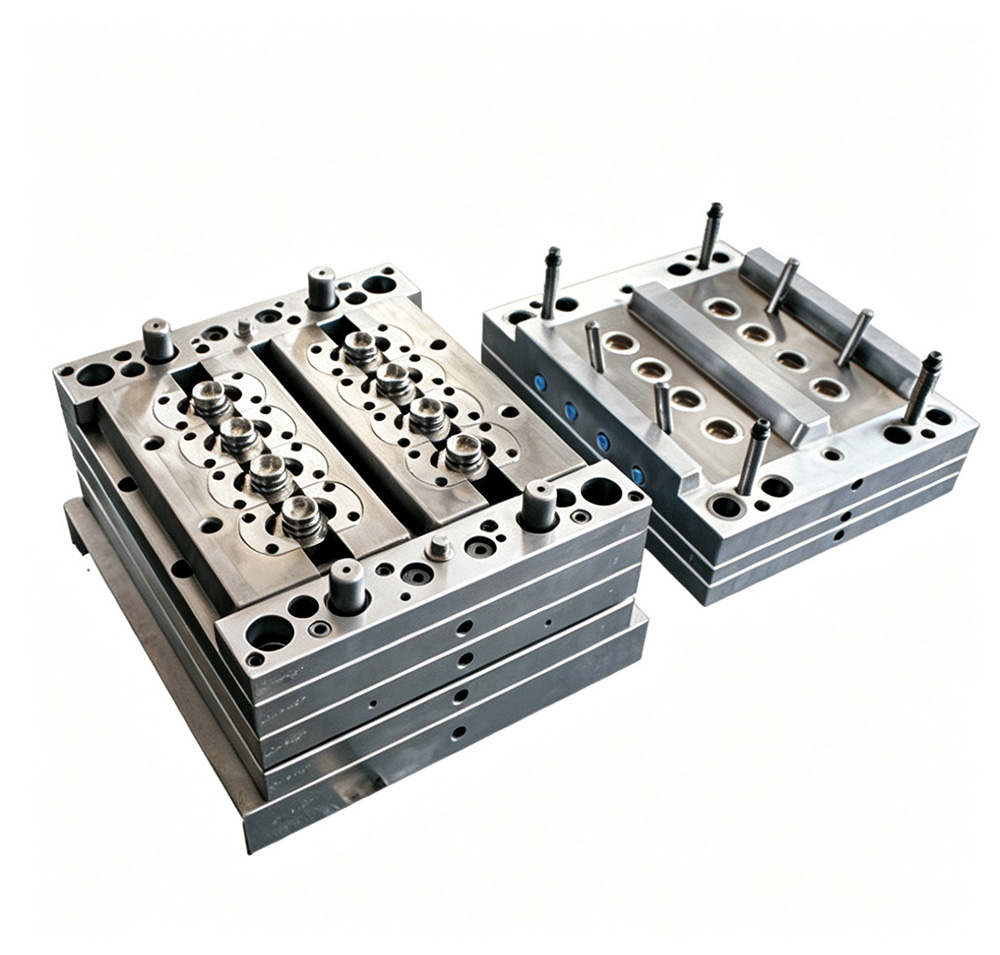
Every minute your injection or blow molding machine is stopped for a mold change, you lose production. At 500 US dollars per hour in lost output, a two-hour changeover costs 1,000 US dollars. If you change molds twice a week, that is 100,000 US dollars per year in lost production.
Many factories accept slow changeovers as normal. They schedule long downtime windows. They assign two or three workers to each change. They accept the production loss.
Meto does not accept this. Our quick change system reduces preform mold changeover time from 2 hours to 20 minutes or less. This article explains how.
Part 1: Why Conventional Changeovers Take So Long
A conventional preform mold changeover involves many time-consuming steps.
First, cooling lines must be disconnected. Standard threaded fittings require tools. Each line takes 1 to 2 minutes to loosen. With 8 to 16 cooling lines, this step takes 15 to 20 minutes.
Second, electrical connections must be removed. Hot runner heaters and thermocouples have individual wires. Operators match wires to a diagram. Mistakes cause problems later.
Third, the mold must be unbolted from the machine platen. Standard bolts require tools. Multiple bolts must be loosened evenly.
Fourth, the old mold is removed. Heavy molds require overhead cranes or forklifts. Positioning is slow and careful.
Fifth, the new mold is installed. Alignment must be checked with dial indicators. The mold is leveled and squared.
Sixth, connections are reconnected. Cooling lines are threaded back on. Wires are reconnected.
Seventh, test shots are run. Parameters are adjusted. Quality is verified.
The total time is typically 60 to 120 minutes for an experienced team. For less experienced teams, it can take longer.
Part 2: The Five Principles of Quick Change
Meto's quick change system is based on five principles.
Principle one is standardization. All Meto quick change molds share the same mounting interface. The locating ring diameter is the same. The mold height is the same. The cooling fitting type is the same.
Principle two is simplification. Complex operations are eliminated. Threaded fittings become push to connect. Individual wires become single plugs.
Principle three is precision. Alignment is built into the mold interface. No dial indicators are needed. The mold self-centers.
Principle four is accessibility. All connections are easy to reach. No tools are required for most operations. One person can perform the change.
Principle five is predictability. Every change follows the same steps. Operators follow a checklist. Results are consistent.
Part 3: Standardized Mounting Interface
The foundation of quick change is a standardized mounting interface.
Meto designs all quick change preform molds with the same locating ring diameter. This ring fits into a matching recess on the machine platen. When the mold is pushed into place, it self-centers. No alignment tools are required.
The mold height is also standardized. All Meto quick change molds for a given machine have the same stack height. Clamping force is consistent. Ejector stroke is consistent. No adjustments are needed.
The bolt pattern is standardized. The same bolts secure any mold. Operators do not need to search for different bolt sizes.
Part 4: Quick Connect Cooling System
Cooling connections are a major time consumer in conventional changeovers.
Meto uses push to connect cooling fittings. The operator pushes the hose onto the fitting until it clicks. Removal requires pulling a collar. No tools. No threading. No sealant.
Each cooling circuit has its own quick connect fitting. Fittings are color coded. Blue for supply. Red for return. Operators cannot connect incorrectly.
The fittings are designed for high pressure and temperature. They seal reliably. They do not leak.
For large molds with many cooling circuits, Meto uses a manifold system. All cooling lines connect to a single manifold plate. One push to connect fitting connects all lines at once.
Part 5: Single Plug Electrical Connections
Hot runner molds require electrical connections for heaters and thermocouples.
Conventional molds have individual wires for each heater and thermocouple. A 32 cavity mold may have 64 wires. Connecting them correctly takes time and care.
Meto uses a single multi-pin plug for all electrical connections. One plug carries power for all heaters. One plug carries thermocouple signals. The plugs are keyed. They cannot be inserted incorrectly.
The plugs are industrial rated for high temperature and current. They are reliable for millions of cycles.
Part 6: Self Centering Alignment
Conventional mold alignment requires dial indicators and careful adjustment.
Meto uses a taper lock locating ring. The ring has a tapered surface that matches a taper on the machine platen. When the mold is pushed into place, the taper centers it automatically.
The locating ring is hardened steel. It maintains precision for millions of cycles. It does not wear or deform.
Operators do not need to check alignment. The mold is always centered. This eliminates a major source of changeover time and errors.
Part 7: Preset Ejector System
Ejector pins must be adjusted for each mold. Conventional molds require adjusting ejector pin height during each changeover.
Meto measures the customer's ejector stroke during the design phase. The mold is built with fixed ejector pins at the correct height. No adjustment is needed during changeover.
For molds with different ejector requirements, Meto uses quick change ejector plates. The entire ejector plate can be replaced in minutes. No individual pin adjustment is needed.
Part 8: Quick Change Insert Design
For factories that change preform neck finishes frequently, Meto offers quick change neck inserts.
The neck finish insert is a separate component. It can be removed and replaced without removing the mold from the machine. The insert is held by quick release clamps. No bolts are needed.
Changing the neck finish takes 5 to 10 minutes per cavity. For a 16 cavity mold, the total time is less than 30 minutes. A conventional change would require removing the entire mold.
Part 9: The 20 Minute Changeover Process
With Meto's quick change system, the changeover process is structured and fast.
Step one is preparing the new mold. While the old mold is still running, operators stage the new mold next to the machine. Cooling hoses are pre-connected to the manifold. Electrical connections are ready.
Step two is stopping production. The machine cycles to empty. The old mold is opened.
Step three is disconnecting services. Cooling quick connects are released. Electrical plugs are pulled. Time is 2 to 3 minutes.
Step four is removing the old mold. The mold is unclamped. It slides out on the mold change cart. Time is 3 to 4 minutes.
Step five is installing the new mold. The mold slides into place. Locating rings center it. Clamps are tightened. Time is 3 to 4 minutes.
Step six is reconnecting services. Cooling quick connects are pushed in. Electrical plugs are inserted. Time is 2 to 3 minutes.
Step seven is startup. The operator enters the parameter sheet settings. First test shots are run. Quality is checked. Time is 5 to 7 minutes.
Total time is 15 to 20 minutes.
Part 10: The Role of Documentation
Every Meto quick change mold ships with a changeover checklist.
The checklist lists every step in order. It shows photos of each connection point. It lists torque specifications for clamps. It includes parameter settings for startup.
Operators follow the checklist every time. This ensures consistency. No steps are forgotten. No mistakes are made.
The checklist is laminated for durability. It is mounted near the machine for easy reference.
Part 11: Operator Training
A quick change system is only as fast as the operator using it.
Meto provides operator training for all quick change molds. Training covers mold installation and removal, cooling and electrical connections, alignment verification, startup procedure, and safety precautions.
Training is provided on site at the customer facility. The trainer works with operators until they can perform a changeover in under 20 minutes.
Part 12: Real Customer Results
A water bottler in Southeast Asia used to change preform molds in 90 minutes. Their team of two operators used conventional molds with threaded fittings. They switched to Meto quick change molds. Changeover time dropped to 18 minutes. They now change molds daily instead of weekly. Annual production increased by 120 hours.
A contract preform molder in Mexico changes molds four times per day. They have 12 different preform sizes. Before Meto, each change took 55 minutes. With Meto quick change molds, each change takes 22 minutes. They save 132 minutes per day or 550 hours per year.
A blow molding customer in South America changed molds once per shift. Each change took 2 hours. With Meto quick change blow molds, changeover time is 25 minutes. They eliminated one full shift of downtime per week.
Part 13: Return on Investment
The quick change system adds cost to the mold. The additional cost is typically 10 to 20 percent of the mold price.
But the return on investment is fast. Consider a factory that changes molds twice per week. Conventional changeover time is 2 hours. Meto quick change time is 20 minutes. Time saved per change is 100 minutes. Annual time saved is 100 minutes x 2 changes x 50 weeks equals 10,000 minutes or 167 hours. At 500 US dollars per hour, the annual savings is 83,500 US dollars.
The additional cost of quick change features on a 32 cavity preform mold is approximately 8,000 to 12,000 US dollars. Payback period is 1 to 2 months.
For factories with more frequent changeovers, the payback is even faster.
Part 14: Quick Change for Blow Molds
Meto's quick change system is not limited to preform molds. It also applies to blow molds.
Blow mold changeovers involve similar steps. Cooling lines. Alignment. Clamping. Meto applies the same principles. Quick connect cooling. Self centering alignment. Preset clamping.
A conventional blow mold change on a PET stretch blow machine takes 30 to 60 minutes depending on cavitation. Meto quick change reduces this to 10 to 15 minutes. For extrusion blow molds, the savings are similar.
Part 15: Quick Change for Existing Molds
Meto can retrofit quick change features to existing molds. This is a cost effective way to improve changeover time without buying new molds.
Retrofit options include adding quick connect cooling fittings, adding quick connect electrical plugs, modifying locating rings for self centering, and adding quick change ejector plates. The cost varies based on the mold design and condition. Most retrofits pay back within 6 months.
Contact Meto for a retrofit assessment. Send mold photos and specifications. We will provide a recommendation and quotation.
Part 16: Summary
Slow mold changeovers are not inevitable. They are the result of conventional mold designs that prioritize low cost over efficiency.
Meto's quick change system addresses every time consuming step of the changeover process. Standardized mounting interface. Quick connect cooling. Single plug electrical. Self centering alignment. Preset ejectors. Quick change inserts.
The result is changeover time reduced from 2 hours to 20 minutes. For factories with frequent changeovers, the time savings translate directly into increased production and lower costs.
If you are ready to stop wasting hours on slow changeovers, talk to Meto.
Contact Meto today to discuss your changeover challenges. Request a free changeover time analysis or a quote for a quick change preform mold.