
New vs. Refurbished Preform Molds: Meto Helps You Calculate the Long Term Cost
New vs. Refurbished Preform Molds: Meto Helps You Calculate the Long Term Cost
A preform mold is a major investment. It is natural to look for ways to save money. Refurbished molds or used molds often appear attractive. The price is lower. Sometimes much lower. But lower upfront cost does not always mean lower total cost. In fact, refurbished molds often cost more over their lifetime than new molds.
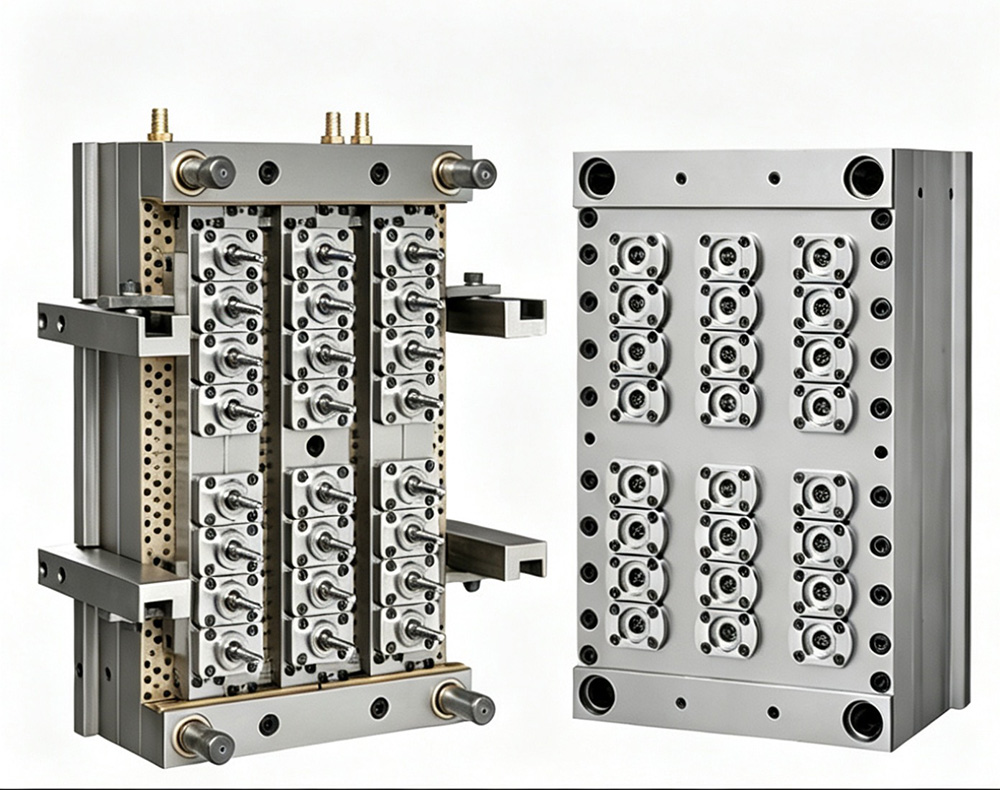
This article compares new Meto preform molds with refurbished molds and used molds. We look at upfront price, mold life, maintenance cost, downtime, and scrap rate. By the end, you will know how to calculate the true long term cost of any mold.
Part 1: What Is a Refurbished Preform Mold
A refurbished preform mold is a used mold that has been repaired and resold. The level of refurbishment varies widely.
Basic refurbishment includes cleaning and replacing worn guide bushings. The mold is then resold as is.
Standard refurbishment includes cleaning, bushing replacement, cavity repolishing, and minor repairs. The mold is tested briefly.
Full refurbishment includes disassembly, new bushings and ejector pins, cavity repolishing, neck finish recutting, gate area reconditioning, cooling channel cleaning, and trial molding.
The problem is that no two refurbished molds are the same. Some have been run for 2 million cycles. Some for 5 million cycles. Some have been well maintained. Some have been poorly maintained. You rarely know the full history.
Part 2: What Is a Used Preform Mold
A used preform mold is simply a mold taken from one factory and sold to another. No refurbishment. No repairs. The buyer accepts the mold as is.
Used molds are cheaper than refurbished molds. They are also riskier. You have no idea how many cycles remain. You have no idea if the steel is still within tolerance. You have no idea if there are hidden cracks or damage.
Some used molds work fine. Many do not. It is a gamble.
Part 3: What Is a New Meto Preform Mold
A new Meto preform mold is built from certified steel. Every component is new. The mold is designed for your specific preform and machine. Heat treatment is performed in house. Every cavity is hardness tested. The mold undergoes trial molding before shipment. You receive full documentation including mill certificates, heat treatment reports, hardness test results, and trial molding data.
You know exactly what you are getting. There are no surprises.
Part 4: Upfront Price Comparison
This is where refurbished and used molds seem attractive.
A new 32 cavity preform mold with hot runner and H11 steel from Meto costs between 45,000 and 65,000 US dollars.
A fully refurbished 32 cavity preform mold from a specialized refurbisher costs between 25,000 and 40,000 US dollars.
A standard refurbished 32 cavity preform mold costs between 15,000 and 25,000 US dollars.
A used 32 cavity preform mold as is costs between 5,000 and 15,000 US dollars.
At first glance, used molds look like a bargain. But upfront price is only the beginning.
Part 5: Expected Remaining Life Comparison
This is where the math changes.
A new Meto preform mold with H11 steel and proper heat treatment is designed for 5 to 7 million cycles. With nitriding, expected life is 7 to 10 million cycles.
A fully refurbished mold has already been used. The refurbisher may have replaced bushings and repolished cavities. But the core steel has already been through millions of thermal cycles. The expected remaining life is typically 2 to 4 million cycles. Some refurbishers claim more. Be skeptical.
A standard refurbished mold has less work done. Remaining life is often 1 to 3 million cycles. The condition of the steel is unknown.
A used mold as is is a complete unknown. It could have 1 million cycles left. It could have 100,000 cycles left. You are gambling.
Part 6: Maintenance Cost Comparison
Maintenance costs do not depend only on cycles. They also depend on the condition of the mold.
A new Meto mold has all new components. Guide bushings are new. Ejector pins are new. Cooling channels are clean. The first major maintenance is typically at 1 to 2 million cycles.
A refurbished mold starts with partially worn components. The seller may have replaced bushings. But the cavity steel may already show wear. Cooling channels may have scale buildup that is not fully removed. Maintenance intervals are shorter. Often the first major maintenance is needed within 500,000 cycles.
A used mold as is may need maintenance immediately. Many buyers of used molds discover worn bushings, scratched cavities, or blocked cooling channels within weeks.
Part 7: Downtime Cost Comparison
Downtime is expensive. Every hour the mold is not running, you lose money.
New Meto molds are reliable. Unplanned downtime is rare. When maintenance is needed, it is predictable and scheduled.
Refurbished molds have higher risk of unplanned downtime. A bushing that was not replaced may fail. A hidden crack may appear. A cooling channel that was not properly cleaned may cause hot spots. Each unplanned stop costs production.
Used molds as is have the highest risk. You do not know the history. A used mold may look fine but fail within months.
Part 8: Scrap Rate Comparison
Scrap rate is the percentage of preforms that are rejected.
New Meto molds guarantee cavity to cavity weight variation of 0.3 percent or less. This low variation means low scrap rate. Typical scrap rate for a new Meto mold is 0.3 to 0.7 percent.
Refurbished molds have higher variation. The cavities have been through millions of cycles. Even after repolishing, the dimensions may not be as precise as new. Typical scrap rate is 0.8 to 1.5 percent.
Used molds as is have the highest variation. Cavities may be worn unevenly. Scrap rate can be 1.5 to 3.0 percent or higher.
Over millions of cycles, a higher scrap rate costs significant money.
Part 9: Total Cost Calculation Method
To compare new versus refurbished versus used, you need to calculate total cost over a specific period. Here is the formula.
Total cost equals upfront price plus maintenance cost plus downtime cost plus scrap cost.
Calculate each over the period you plan to use the mold. For example, 5 years or 10 million cycles.
Let us run the numbers for a 32 cavity preform mold over 5 years or 10 million cycles, whichever comes first.
Part 10: New Meto Mold Total Cost Example
Upfront price for a new Meto 32 cavity preform mold with H11 steel is 50,000 US dollars.
Maintenance cost over 10 million cycles includes bushing replacement at 2 million and 5 million cycles and one full inspection at 8 million cycles. Total maintenance cost is approximately 5,000 US dollars.
Downtime cost assumes scheduled maintenance only. No unplanned stops. Downtime for scheduled maintenance is 4 days total over 5 years at 2,000 US dollars per day lost production. That is 8,000 US dollars.
Scrap cost assumes 0.5 percent scrap rate over 10 million preforms with material cost of 1,000 US dollars per ton. Preform weight is 20 grams. Total material cost is 200,000 US dollars. Scrap cost is 0.5 percent or 1,000 US dollars.
Total 5 year cost is 50,000 plus 5,000 plus 8,000 plus 1,000 equals 64,000 US dollars.
Part 11: Fully Refurbished Mold Total Cost Example
Upfront price for a fully refurbished 32 cavity preform mold is 30,000 US dollars.
Remaining life is estimated at 3 million cycles. To reach 10 million cycles, you need to buy three refurbished molds. One initially, a second at 3 million cycles, a third at 6 million cycles. Total upfront price for three molds is 90,000 US dollars.
Maintenance cost per mold is similar to new but intervals are shorter because the mold starts partially worn. Assume 3,000 US dollars per mold or 9,000 US dollars total.
Downtime cost includes scheduled maintenance plus unplanned stops from unknown condition. Also downtime for mold changeovers each time a refurbished mold reaches end of life. Assume 2 days unplanned downtime per mold plus 2 days changeover per replacement. Total 12 days at 2,000 US dollars per day equals 24,000 US dollars.
Scrap cost assumes 1.2 percent scrap rate. Over 10 million preforms, 200,000 US dollars material cost at 1.2 percent scrap equals 2,400 US dollars.
Total 5 year cost is 90,000 plus 9,000 plus 24,000 plus 2,400 equals 125,400 US dollars.
Part 12: Used Mold As Is Total Cost Example
Upfront price for a used 32 cavity preform mold as is is 10,000 US dollars.
Remaining life is unknown. Assume 1 million cycles if you are lucky. To reach 10 million cycles, you need to buy ten used molds. Total upfront price is 100,000 US dollars.
Maintenance cost is unpredictable. Assume 2,000 US dollars per mold or 20,000 US dollars total. Some molds may need immediate repairs.
Downtime cost is high. Unplanned stops are common. Changeovers for ten molds are frequent. Assume 4 days unplanned downtime per mold plus 2 days changeover per replacement. Total 60 days at 2,000 US dollars per day equals 120,000 US dollars.
Scrap cost assumes 2.0 percent scrap rate. Over 10 million preforms, 200,000 US dollars material cost at 2.0 percent scrap equals 4,000 US dollars.
Total 5 year cost is 100,000 plus 20,000 plus 120,000 plus 4,000 equals 244,000 US dollars.
Part 13: Cost Comparison Table
Over 5 years or 10 million preforms, the costs are as follows.
New Meto mold total cost is 64,000 US dollars.
Fully refurbished mold total cost is 125,400 US dollars.
Used mold as is total cost is 244,000 US dollars.
The new Meto mold is approximately half the cost of refurbished molds and one quarter the cost of used molds over the long term.
Part 14: Why New Molds Cost Less Over Time
The numbers show a clear pattern. Lower upfront price does not mean lower total cost. In fact, the cheapest upfront option, used molds, became the most expensive over time.
There are several reasons. First, new molds last longer. A single new mold can run 5 to 7 million cycles. You need multiple refurbished or used molds to reach the same total cycles.
Second, new molds have lower maintenance cost. Everything starts new. Maintenance is predictable and scheduled.
Third, new molds have less downtime. Unplanned stops are rare. Changeovers are less frequent.
Fourth, new molds have lower scrap rate. Consistent cavity dimensions mean fewer rejected preforms.
Part 15: Hidden Risks of Refurbished and Used Molds
Beyond the numbers, there are hidden risks.
Unknown history. You do not know how many cycles the mold has run. You do not know if it was properly maintained. You do not know if it was run with abrasive materials.
Unknown steel condition. Steel can crack after many thermal cycles. Cracks may not be visible to the naked eye. A refurbished mold may look fine but fail catastrophically.
Unknown cooling condition. Cooling channels may have internal scale that is difficult to remove. Poor cooling causes hot spots and longer cycle times.
Unknown thread condition. Neck finish threads wear over time. Refurbishers may recut threads, but each recut removes material. After multiple recuts, the neck finish may no longer be within specification.
No warranty or limited warranty. Used molds are typically sold as is. Refurbished molds may have a short warranty of 30 to 90 days. A new Meto mold comes with a full warranty and guaranteed performance.
Part 16: When Refurbished Molds Make Sense
Refurbished molds are not always a bad choice. They make sense in specific situations.
Low volume production. If you only need 500,000 preforms per year, a refurbished mold may be adequate. The risks are lower because total cycles are low.
Prototype or testing. If you are testing a new preform design, a refurbished mold can be a low cost way to produce samples.
Emergency backup. A refurbished mold can serve as a spare to keep production running while a new mold is being built.
Temporary line expansion. If you need extra capacity for a short period, a refurbished mold can fill the gap.
For high volume continuous production, new molds are almost always more economical.
Part 17: Meto New Mold Value Summary
Here is what you get with a new Meto preform mold.
Certified H11 steel. No mystery metal. No unknown alloy.
In house vacuum heat treatment. Consistent hardness. No decarburization.
Double tempering. Tough microstructure. No brittleness.
One hundred percent hardness testing. Every cavity verified. No weak spots.
Conformal cooling design. Uniform temperature. Faster cycles.
Trial molding before shipment. Proven performance. No surprises.
Full documentation. Mill certificates. Heat treatment reports. Hardness data. Trial molding results.
Expected life of 5 to 7 million cycles. Some customers achieve 8 to 10 million with nitriding.
Scrap rate of 0.3 to 0.7 percent. Consistent preforms. Less waste.
Warranty and support. Meto stands behind every mold.
Part 18: Questions to Ask Before Buying a Refurbished Mold
If you are considering a refurbished mold, ask these questions.
How many cycles has this mold run? Get a number. Not an estimate.
What is the history? What materials were run? Was maintenance documented?
What refurbishment was performed? Exactly which components were replaced? Which were not?
What testing was done? Was the mold trial molded? Can you see the results?
What is the remaining life guarantee? Will the seller stand behind the estimate?
What is the warranty? What happens if the mold fails after 100,000 cycles?
Most refurbishers cannot answer these questions fully. The history is often unknown.
Part 19: Meto Refurbishment Services
Meto also offers refurbishment services for customers who already own Meto molds. When a Meto mold reaches the end of its first life, Meto can fully refurbish it. Refurbishment includes disassembly, cleaning, bushing replacement, ejector pin replacement, cavity repolishing, neck finish recutting if needed, cooling channel cleaning, and trial molding.
A Meto refurbished mold can achieve 2 to 4 million additional cycles. The cost is approximately 30 to 40 percent of a new mold. This is a good option for customers who already own Meto molds and want to extend their life.
Part 20: Summary and Recommendation
The data is clear. New Meto preform molds have higher upfront cost but lower total cost over time. Refurbished molds cost less initially but cost more in maintenance, downtime, and scrap. Used molds as is are the most expensive option when all costs are included.
For high volume continuous production, new molds are the smart choice. For low volume or temporary needs, refurbished molds may make sense.
If you are considering a refurbished or used mold, calculate the total cost. Include upfront price, expected remaining life, maintenance, downtime, and scrap. Use the formula in this article. You may find that a new Meto mold is less expensive than you thought.
Contact Meto today for a new preform mold quotation. We will also provide a total cost estimate for your specific production volume. Compare new versus refurbished for your situation. Let the numbers guide your decision.

Ruby
We can provide you with high-quality PET preform molds,cap molds,and blow molding machines.Looking forward to communicating and cooperating with you!
Helpline and Support
008613757660057