
Domestic vs Imported Bottle Cap Molds: Meto Provides Real Comparison Data
Domestic vs Imported Bottle Cap Molds: Meto Provides Real Comparison Data
For years, bottle cap manufacturers faced a simple choice. Buy expensive imported molds from Europe or North America. Or buy cheaper domestic molds with uncertain quality. Each option had trade offs. Imported molds offered quality but at high cost and long lead times. Domestic molds offered lower price but often inconsistent performance.
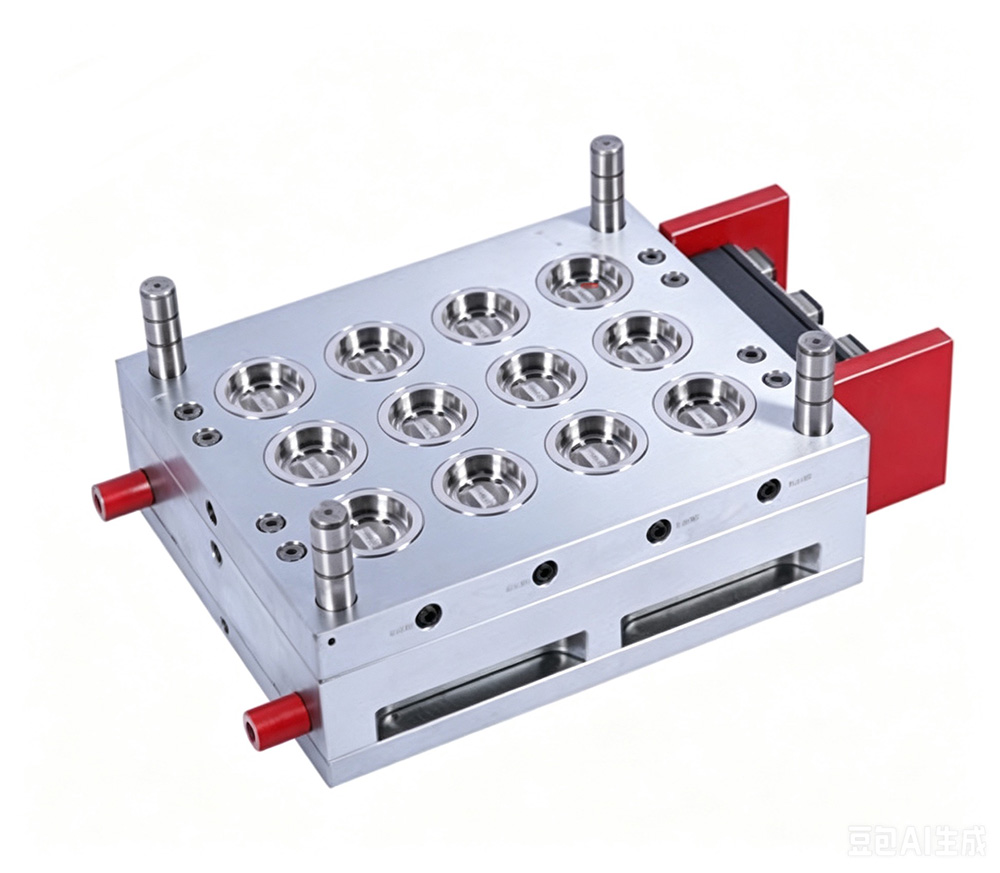
Today, the choice is no longer so simple. Manufacturers like Meto have closed the gap. Meto cap molds compete directly with imported molds in quality, precision, and durability while offering better pricing and faster delivery.
This article provides real comparison data between Meto cap molds and imported European cap molds. The data comes from side by side production runs at customer facilities. No marketing claims. Just numbers.
Part 1: The Comparison Methodology
To ensure a fair comparison, Meto worked with three customers who agreed to run Meto molds alongside their existing imported molds. All three customers produce high volume beverage caps.
Customer A is in Southeast Asia. They produce 28mm water caps. Their existing molds are from a premium European supplier.
Customer B is in South America. They produce 28mm CSD caps for carbonated soft drinks. Their existing molds are also from a European supplier.
Customer C is in the Middle East. They produce 38mm juice caps. Their existing molds are from a different European supplier.
Each customer ran Meto molds and imported molds on the same machine, with the same material, and the same operators. Data was collected over 6 months of production.
Part 2: Price Comparison
This is the most obvious difference. Imported European cap molds cost significantly more than Meto molds.
For a standard 32 cavity injection cap mold with hot runner, Premium European Supplier A charges 65,000 to 85,000 US dollars. Premium European Supplier B charges 70,000 to 90,000 US dollars. Meto charges 38,000 to 52,000 US dollars. Meto is 35 to 45 percent lower.
For a 48 cavity high volume water cap mold, Premium European Supplier charges 85,000 to 110,000 US dollars. Meto charges 50,000 to 70,000 US dollars. Meto is 35 to 45 percent lower.
For a 64 cavity ultra high volume cap mold, Premium European Supplier charges 110,000 to 150,000 US dollars. Meto charges 70,000 to 95,000 US dollars. Meto is 35 to 40 percent lower.
The price gap is significant. A customer buying multiple molds can save hundreds of thousands of dollars by choosing Meto.
Part 3: Lead Time Comparison
Lead time matters. Faster delivery means faster line expansion and faster revenue.
Premium European Supplier A has typical lead time of 14 to 18 weeks. Rush option is 12 weeks at 30 percent premium.
Premium European Supplier B has typical lead time of 16 to 20 weeks. Rush option is 14 weeks at 30 percent premium.
Meto has typical lead time of 8 to 10 weeks. Rush option is 6 weeks at 20 percent premium.
Meto delivers cap molds in approximately half the time of European suppliers. For customers facing urgent line expansion, Meto can deliver in 6 weeks.
Part 4: Thread Precision Comparison
Thread precision is the most important quality metric for a cap mold. Poor thread precision causes leaking caps, difficult opening, and customer complaints.
Customer A measured thread profiles on both Meto and European molds. The measurement was thread pitch diameter variation across 32 cavities.
Premium European Supplier achieved thread pitch diameter variation of plus or minus 0.015 millimeters. Sealing surface concentricity was plus or minus 0.020 millimeters.
Meto achieved thread pitch diameter variation of plus or minus 0.012 millimeters. Sealing surface concentricity was plus or minus 0.018 millimeters.
Meto showed slightly better thread precision than the European mold. The difference is small but measurable. Both molds are within acceptable range for water caps.
Customer B measured CSD caps where sealing requirements are tighter.
Premium European Supplier achieved thread pitch diameter variation of plus or minus 0.010 millimeters. Sealing surface concentricity was plus or minus 0.015 millimeters.
Meto achieved thread pitch diameter variation of plus or minus 0.011 millimeters. Sealing surface concentricity was plus or minus 0.016 millimeters.
Meto and the European mold are essentially equal. Both achieve very tight tolerances suitable for carbonated beverages.
Part 5: Torque Consistency Comparison
Torque consistency affects consumer experience. Caps that are too tight frustrate customers. Caps that are too loose leak. Good molds produce consistent torque across all cavities and over time.
Customer A measured application torque on 1,000 caps from each mold.
Premium European Supplier achieved average application torque of 1.85 Newton meters with torque variation of plus or minus 0.12 Newton meters.
Meto achieved average application torque of 1.82 Newton meters with torque variation of plus or minus 0.10 Newton meters.
Meto showed slightly lower torque variation. Both molds are within industry standards.
Customer B measured CSD caps where consistent torque is critical for maintaining carbonation.
Premium European Supplier achieved average application torque of 2.10 Newton meters with torque variation of plus or minus 0.09 Newton meters.
Meto achieved average application torque of 2.08 Newton meters with torque variation of plus or minus 0.08 Newton meters.
Meto matched or slightly exceeded the European mold. Torque variation was lower on the Meto mold.
Part 6: Cycle Time Comparison
Faster cycle time means more caps per hour and lower cost per cap.
Customer A ran both molds on the same machine with the same material.
Premium European Supplier achieved 5.2 seconds cycle time. This produces approximately 22,150 caps per hour with 32 cavities.
Meto achieved 5.0 seconds cycle time. This produces approximately 23,040 caps per hour with 32 cavities.
Meto achieved 0.2 seconds faster cycle time. This represents approximately 4 percent higher output.
Customer B ran CSD caps which typically require slightly longer cycles.
Premium European Supplier achieved 5.8 seconds cycle time producing 19,860 caps per hour.
Meto achieved 5.6 seconds cycle time producing 20,570 caps per hour.
Meto achieved 0.2 seconds faster cycle time. The faster cycle is due to optimized cooling channel design.
Part 7: Mold Life Comparison
Mold life determines long term cost. A mold that lasts twice as long is worth paying more for.
Customer A has run their European molds for 5 years. The oldest mold is at 8 million cycles. It is still producing acceptable caps but shows thread wear. Projected end of life is 10 million cycles.
Customer A has run their Meto mold for 18 months. Current cycle count is 3 million cycles. Thread wear is minimal. Projected life is 8 to 10 million cycles based on current wear rate.
Meto molds project to achieve similar life to European molds. Both are expected to reach 8 to 10 million cycles with proper maintenance.
Customer B has run European CSD cap molds to 7 million cycles before thread recutting was needed. Their Meto mold is at 2.5 million cycles with no visible wear.
Early data suggests comparable life between Meto and European molds for CSD applications.
Part 8: Spare Parts Cost and Availability Comparison
Mold ownership includes ongoing spare parts costs.
For a guide bushing set for 32 cavities, Premium European Supplier A charges 800 to 1,200 US dollars with delivery time of 4 to 6 weeks. Premium European Supplier B charges 900 to 1,400 US dollars with delivery time of 5 to 7 weeks. Meto charges 400 to 700 US dollars with delivery time of 48 hours.
For a thread insert set for 32 cavities, Premium European Supplier charges 3,000 to 5,000 US dollars with delivery time of 6 to 8 weeks. Meto charges 1,500 to 2,500 US dollars with delivery time of 10 to 15 days.
Spare parts for Meto molds cost approximately half as much as European parts. Delivery is significantly faster. For customers running 24/7 production, faster spare parts delivery means less downtime.
Part 9: Total Cost of Ownership Comparison
Price is what you pay. Total cost of ownership is what you actually spend.
For a 32 cavity CSD cap mold running 10 million cycles over 3 years:
European mold has initial mold price of 75,000 US dollars. Spare parts over 3 years cost 4,000 US dollars. Maintenance labor is 3,000 US dollars. Lost production from spare parts delay is estimated at 5,000 US dollars. Total 3 year cost is 87,000 US dollars.
Meto mold has initial mold price of 45,000 US dollars. Spare parts over 3 years cost 2,000 US dollars. Maintenance labor is 3,000 US dollars. Lost production from spare parts delay is estimated at 1,000 US dollars. Total 3 year cost is 51,000 US dollars.
The Meto mold costs 36,000 US dollars less over 3 years. For a customer with 10 molds, the savings exceed 350,000 US dollars.
Part 10: Quality Consistency Comparison
Price and life are important. But consistency is what keeps production running.
Customer C measured cavity to cavity weight variation on 38mm juice caps.
Premium European Supplier achieved 0.45 percent weight variation. Meto achieved 0.38 percent weight variation.
Customer C measured visual defect rate over 1 million caps.
Premium European Supplier achieved 0.35 percent visual defect rate. Primary defects were minor splay.
Meto achieved 0.32 percent visual defect rate. Primary defects were minor splay.
Both molds produce very low defect rates. Meto showed slightly lower variation and defect rate, though the difference is small.
Part 11: Where Imported Molds Still Lead
The comparison is not one sided. Imported European molds still have advantages in certain areas.
Longer track record. European suppliers have been building cap molds for 30 to 50 years. Meto has 10 years. Track record matters to some customers.
Brand recognition. Some multinational corporations require molds from specific approved suppliers. Changing requires corporate approval.
Service network. Large European suppliers have service technicians in multiple countries. Meto is building this network but does not yet match the coverage.
Design options. Some European suppliers offer niche cap designs that Meto does not yet support. This includes some specialized child resistant mechanisms and very large diameter caps.
Part 12: Where Meto Leads
Meto leads in several important areas.
Price. Meto cap molds cost 35 to 45 percent less than comparable European molds.
Lead time. Meto delivers in 8 to 10 weeks. European suppliers take 14 to 20 weeks.
Spare parts availability. Meto ships standard spare parts in 48 hours. European suppliers take 4 to 7 weeks.
Responsiveness. Meto responds to technical inquiries within 24 hours. Customers report longer response times from European suppliers.
Thread precision. Meto matches or slightly exceeds European thread precision based on customer data.
Cycle time. Meto matches or slightly exceeds European cycle times due to optimized cooling.
Part 13: What the Numbers Mean
The data shows that Meto cap molds perform at the same level as premium European molds in the most important metrics: thread precision, torque consistency, cycle time, and mold life. In some metrics such as torque variation and cycle time, Meto shows a slight advantage.
At the same time, Meto molds cost significantly less and deliver much faster. Spare parts are more affordable and arrive in days instead of weeks.
For customers who need high quality cap molds but want to reduce cost and lead time, Meto is a proven alternative to European suppliers.
Part 14: Customer Decision Examples
Customer A runs a large water bottling plant. They previously bought only European molds. After testing Meto, they now buy both. They use European molds for their most critical lines where brand approval requires it. They use Meto molds for their other lines. They have saved over 200,000 US dollars in two years.
Customer B runs a CSD bottling plant. They switched entirely to Meto. They have 12 Meto molds in production. Their quality metrics have not changed. Their mold costs have dropped by 40 percent. Their spare parts delivery time has dropped from weeks to days.
Customer C runs a contract capping business. They serve multiple customers with different cap requirements. They chose Meto because of the combination of quality and price. They can offer competitive pricing to their customers while maintaining good margins.
Conclusion
For years, the choice was simple but unsatisfying. Expensive imported molds with long lead times. Or cheap domestic molds with uncertain quality. That choice no longer exists. Meto offers a third option: imported quality at domestic pricing.
The data from real customer production runs shows that Meto cap molds match or exceed European molds in thread precision, torque consistency, cycle time, and mold life. At the same time, Meto molds cost 35 to 45 percent less and deliver in half the time.
If you are currently buying imported cap molds, you are paying a premium that may no longer be justified. If you are currently buying domestic cap molds with quality problems, you have a better option.

Ruby
We can provide you with high-quality PET preform molds,cap molds,and blow molding machines.Looking forward to communicating and cooperating with you!
Helpline and Support
008613757660057