
Precision Injection Molding + High-Speed Blow Molding: Meto Connects the Complete Packaging Mold Chain
Precision Injection Molding + High-Speed Blow Molding: Meto Connects the Complete Packaging Mold Chain
Introduction: The Missing Link in Most Packaging Lines
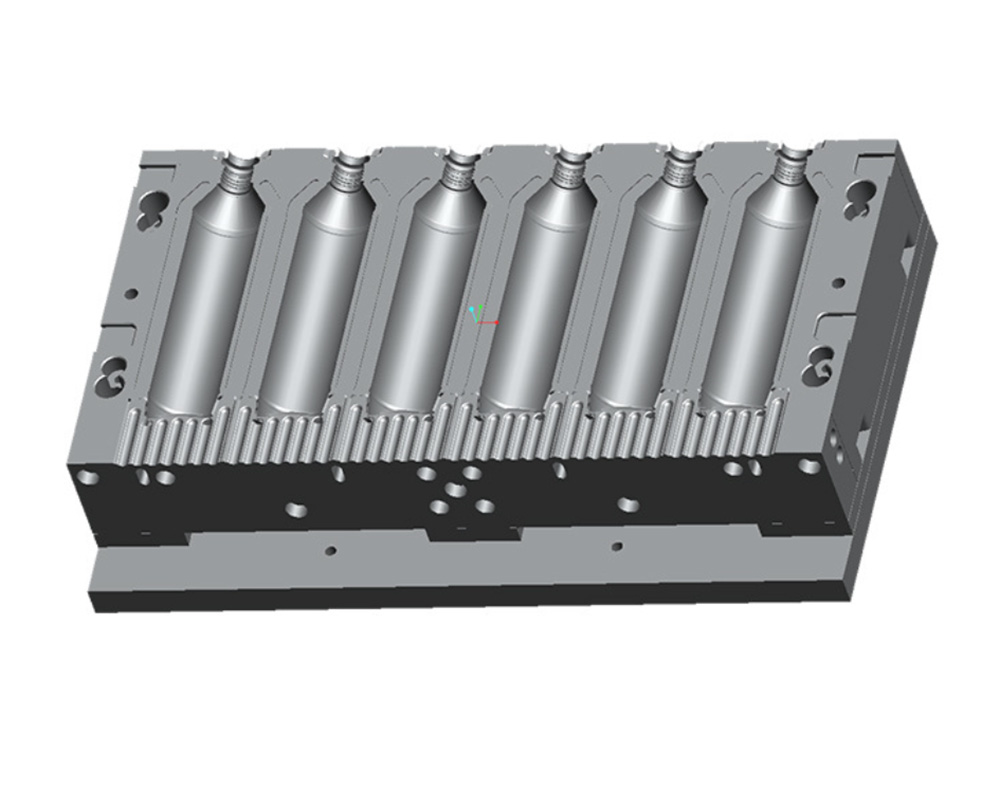
A bottle packaging line consists of three critical mold-based components: the preform (injection molded), the cap (injection or compression molded), and the final bottle (blow molded from the preform). These three elements must work together seamlessly. A preform that does not match the blow mold geometry, or a cap that does not seal correctly against the bottle neck, creates rejects, line stoppages, and customer complaints.
Yet most mold manufacturers specialize in only one of these three areas. A preform mold maker rarely designs bottle caps. A cap mold specialist often has limited knowledge of blow molding dynamics. The result? Mismatched components, inefficiencies, and finger-pointing when problems arise.
Meto is different. With expertise spanning precision injection molding (preforms and caps) and high-speed blow molding (final bottles), Meto connects the complete packaging mold chain. This article explains how this integrated approach benefits bottle manufacturers, reduces costs, and improves production reliability.
Part 1: The Three Links in the Packaging Mold Chain
Before explaining Meto's integrated approach, it is important to understand the three distinct mold types and how they interact.
1.1 Preform Molds (Injection Molding)
The preform is the starting point for PET bottles. It is a tube-shaped part with a finished neck finish (threads and sealing surface) and a body that will be stretched and blown into the final bottle shape.
Key requirements for preform molds:
Precise neck finish dimensions (cap must seal perfectly)
Consistent wall thickness distribution (for uniform blowing)
High cavitation (24, 32, 48 cavities for high volume)
Hot runner systems for balanced melt flow
Fast cooling for short cycle times
1.2 Bottle Cap Molds (Injection or Compression Molding)
The cap seals the bottle. It must mate perfectly with the preform's neck finish — matching thread profile, sealing diameter, and tamper-evident band geometry.
Key requirements for cap molds:
Tight thread tolerances (±0.02mm typical)
Consistent compression or injection fill
High cavitation (32, 48, 64 cavities or more)
Fast ejection and cooling
Compatibility with liner or linerless sealing designs
1.3 Blow Molds (Stretch Blow Molding)
The blow mold takes the preform, reheats it, stretches it axially, and blows it radially into the final bottle shape.
Key requirements for blow molds:
Cavity shape matching the preform's expansion characteristics
Uniform temperature control (affects wall thickness distribution)
Precise alignment (prevents flash)
Durable pinch-off areas (for extrusion blow)
1.4 Why Integration Matters
When preform, cap, and blow molds are designed in isolation, problems emerge:
| Problem | Root Cause |
|---|---|
| Cap does not seal | Preform neck finish and cap thread mismatch |
| Bottle leaks | Preform dimensions not optimized for blow mold |
| Low blow-up ratio | Preform too short or too thick for target bottle |
| High reject rate | Incompatible cooling or venting between mold types |
| Long changeover times | Different mounting interfaces or alignment methods |
Meto's integrated approach eliminates these mismatches by designing all three mold types with compatibility as a primary requirement.
Part 2: Meto's Precision Injection Molding Capability
Meto manufactures both preform molds and cap molds using precision injection molding technology. This section covers both.
2.1 Preform Molds: From 2 to 48 Cavities
Meto's preform molds are designed for PET, rPET, and bio-based polyester materials.
Standard specifications:
| Parameter | Range |
|---|---|
| Cavities | 2, 4, 8, 12, 16, 24, 32, 48 |
| Neck finish | 18mm – 48mm (PCO, 1810, 38mm, custom) |
| Preform weight | 8g – 80g |
| Cycle time (typical) | 6 – 12 seconds (depending on cavitation and preform weight) |
| Hot runner | Valve gate or open gate, electrically heated |
Key design features:
Balanced hot runner system – cavity-to-cavity weight variation <0.5%
Conformal cooling – optimized for neck finish area (most critical for cap sealing)
Venting – strategically placed to eliminate gas traps
Stainless steel options – for corrosion resistance with rPET
Quality verification:
CMM inspection of every cavity
Preform weight and length measurement from trial run
Neck finish gauge testing (go/no-go)
Wall thickness measurement using ultrasonic or optical methods
2.2 Bottle Cap Molds: Injection Molding
Meto manufactures injection-compression cap molds and standard injection cap molds for HDPE, PP, and PET caps.
Typical cap types:
Screw caps (standard beverage)
Sport caps (push-pull)
Flip-top caps
Tamper-evident caps
Child-resistant caps
Linerless caps (with sealing membrane)
Standard specifications:
| Parameter | Range |
|---|---|
| Cavities | 16, 24, 32, 48, 64 |
| Cap diameter | 18mm – 63mm |
| Cycle time (injection) | 4 – 8 seconds |
| Thread type | Standard (PCO, 1881) or custom |
Key design features for cap molds:
Hot runner with multiple drop configurations – ensures even fill across all cavities
Thread unscrewing mechanism – mechanical or hydraulic
Cooling optimization – threads and sealing surface receive priority cooling
Ejector system – air-assist or mechanical pins
Quality verification:
Thread profile measurement (optical comparator or thread gauge)
Sealing surface concentricity check
Closures torque testing (application and removal)
Dimensional inspection (CMM)
2.3 Material Compatibility Across Preforms and Caps
Meto ensures that preform neck finishes and cap threads are designed to mate perfectly. This includes:
Matching thread standards (e.g., PCO 1881, 1810, 38mm)
Coordinating sealing surface geometry (e.g., inner seal, outer seal, or tamper-evident band)
Aligning cooling rates to prevent post-mold shrinkage mismatch
When a customer orders both preform and cap molds from Meto, the company provides a neck finish compatibility report confirming that the two components will seal correctly.
Part 3: Meto's High-Speed Blow Molding Capability
With precision preforms in hand, the next step is blowing them into finished bottles. Meto manufactures high-speed blow molds for PET, PP, and multi-layer materials.
3.1 Stretch Blow Molds for PET Bottles
Meto's stretch blow molds are compatible with all major blow molding machine brands: Sidel, Sipa, Krones, Husky, Aoki, and Asian machines.
Typical configurations:
| Parameter | Range |
|---|---|
| Cavities | 2, 4, 6, 8, 12, 16, 24 |
| Bottle volume | 0.2L – 5L |
| Cycle time (high-speed) | 6 – 12 seconds |
| Neck finish | Matches preform neck finish (must be identical) |
Key design features:
Cavity shape – machined from premium steel (1.2343 or 1.2767)
Cooling channels – conformal design following bottle contour
Alignment system – four hardened pillars with self-lubricating bushings
Quick-change inserts – for rapid neck finish changes
3.2 Extrusion Blow Molds for Larger Containers
For bottles larger than 5L or for materials that are not easily injection molded (e.g., HDPE industrial containers), Meto manufactures extrusion blow molds.
Key features for extrusion blow molds:
Replaceable pinch-off inserts (hardened to 55–58 HRC)
Optimized flash pockets for clean trimming
Cooling channels designed for thick-walled containers
Compatible with single-station or dual-station machines
3.3 Preform-to-Bottle Compatibility
The most critical interface in the packaging chain is between the preform and the blow mold. Meto ensures compatibility by:
Analyzing the preform design – blow-up ratio, stretch rod interaction, material distribution
Simulating the blow process – using mold flow analysis to predict wall thickness
Matching neck finish dimensions – preform neck and blow mold neck ring must be identical
Testing with customer's preforms – during trial molding at Meto's facility
When a customer orders both preform and blow molds from Meto, the company provides a preform-to-bottle compatibility report confirming that the preform will produce the target bottle dimensions and quality.
Part 4: The Meto Integrated Advantage — Why One Supplier for All Three Molds?
4.1 Single Point of Accountability
When a packaging line has problems, who is responsible? If preform, cap, and blow molds come from three different suppliers, each may blame the others.
With Meto supplying all three, there is a single point of accountability. If a problem arises, Meto analyzes the entire chain — preform, cap, and bottle — and provides a solution without finger-pointing.
4.2 Coordinated Design for Optimal Performance
Meto's engineers design preforms, caps, and blow molds as a system, not as isolated components.
Example 1: Neck finish coordination
The preform neck finish must match both the cap threads and the blow mold neck ring. Meto ensures all three use identical geometry, tolerances, and reference points.
Example 2: Cooling alignment
The cooling time in the preform mold affects crystallinity in the neck finish, which affects cap sealing. Meto coordinates cooling design across preform and cap molds to ensure dimensional stability.
Example 3: Cavitation matching
A 48-cavity preform mold paired with a 16-cavity blow mold creates a bottleneck. Meto recommends cavitation ratios that balance the line (e.g., 48-cavity preform to 24-cavity blow mold to 64-cavity cap mold).
4.3 Faster Troubleshooting
When all three molds come from Meto, troubleshooting is faster:
One technical team understands the entire system
Spare parts share common standards (e.g., same guide bushing sizes)
Documentation uses consistent terminology and drawing formats
Remote support can address issues across mold types simultaneously
4.4 Lower Total Cost
While purchasing all three mold types from a single supplier may not always yield the lowest individual mold price, the total cost is typically lower due to:
Reduced compatibility testing (no need to validate interfaces between suppliers)
Fewer line stoppages from mismatched components
Single shipping and customs clearance (for combined orders)
Consolidated spare parts inventory
Part 5: Technical Deep Dive — How Meto Ensures Precision Across All Three Mold Types
5.1 Common Metrology Standards
Meto uses consistent measurement standards across preform, cap, and blow molds:
| Measurement | Preform Mold | Cap Mold | Blow Mold |
|---|---|---|---|
| Dimensional tolerance | ±0.02mm | ±0.015mm | ±0.03mm |
| Surface finish (Ra) | 0.2 – 0.4μm | 0.1 – 0.2μm (threads) | 0.2 – 0.4μm |
| Hardness (cavity) | 48–52 HRC | 48–52 HRC | 48–52 HRC |
| Cooling uniformity | ±3°C | ±2°C | ±5°C |
All measurements are performed on calibrated CMM equipment with traceable certification.
5.2 Common Steel Grades
Meto uses consistent steel families across mold types, simplifying maintenance and spare parts:
| Steel Grade | Preform Mold | Cap Mold | Blow Mold |
|---|---|---|---|
| 1.2343 (H11) | ✓ (high-volume) | ✓ (wear-resistant) | ✓ (standard) |
| 1.2767 | ✗ | ✓ (extreme wear) | ✓ (pinch-off inserts) |
| 1.2083 (420 stainless) | ✓ (rPET/corrosive) | ✓ (food contact) | ✓ (cosmetic bottles) |
| 1.2311 (P20) | ✓ (low-volume) | ✓ (prototype) | ✓ (prototype) |
5.3 Common Cooling Fittings and Layout
Meto standardizes cooling connection types and locations across mold families. A maintenance technician familiar with Meto's preform mold will recognize the same fittings, valve types, and labeling system on a Meto cap mold or blow mold.
Standard cooling specifications:
Fitting type: Quick-connect (industrial standard, 3/8" or 1/2")
Labeling: Blue (supply), Red (return), with cavity number
Manifold: External, with individual cavity shutoff valves
5.4 Common Documentation Format
Every Meto mold — preform, cap, or blow — ships with documentation in the same format:
Exploded view drawing (with part numbers)
Spare parts list (with recommended stocking quantities)
Maintenance schedule (daily, weekly, monthly, million-cycle)
Torque specifications for all fasteners
Troubleshooting guide (symptom → cause → solution)
This consistency reduces training time for customer maintenance teams.
Part 6: Real-World Integrated Solutions — Customer Examples
Case 1: New Beverage Line in Southeast Asia
Customer: Regional soft drink brand building a new PET bottle line
Scope: 500ml bottle, PCO 1881 neck finish, 30,000 bottles per hour target
Meto supplied: 32-cavity preform mold + 48-cavity cap mold + 16-cavity blow mold
Integrated benefits realized:
Preform neck finish matched cap threads perfectly (zero seal failures)
Blow mold cavity geometry optimized for the specific preform
Single Meto engineer commissioned all three molds in 3 days
Line achieved target output within 2 weeks of startup
Customer comment:
"Having one supplier for all three molds simplified everything. No coordination between different vendors. When we had a question, one phone call to Meto answered it." — Plant Manager
Case 2: Cosmetic Bottle with Complex Closure
Customer: European cosmetic brand launching a new skincare line
Challenge: Bottle required a precision flip-top cap with linerless sealing; preform needed special neck geometry
Meto supplied: Custom preform mold + custom flip-top cap mold + 8-cavity blow mold
Integrated benefits realized:
Cap sealing surface designed to match preform neck exactly
Preform neck finish reinforced to withstand flip-top opening/closing cycles
Blow mold cavity polished to high-gloss finish (Ra 0.05μm)
All three molds delivered simultaneously, line started on schedule
Case 3: Water Bottler Expanding from 2 to 3 Product Sizes
Customer: Water bottler in South America adding 1.5L and 0.33L bottles to existing 0.5L line
Challenge: Needed to share preform and cap molds where possible to reduce investment
Meto supplied: Preform molds (two sizes), cap molds (one size fits both), blow molds (two sizes)
Integrated benefits realized:
Cap mold designed to seal on both preform neck finishes
Preform designs share same neck finish (common cap interface)
Blow molds use same alignment system as preform molds
Customer reduced total mold investment by 25% compared to fully independent designs
Part 7: The Meto Manufacturing System for All Mold Types
Meto applies the same rigorous manufacturing processes across all three mold families.
7.1 Design Phase
3D model review with customer
Mold flow analysis (injection for preforms/caps, blow simulation for blow molds)
Cooling simulation (CFD analysis)
Interface compatibility check (preform ↔ cap, preform ↔ blow mold)
7.2 Manufacturing Phase
Steel selection and certification
Rough machining
Stress relieving (if required)
Precision CNC machining (5-axis)
Heat treatment (in-house vacuum furnace)
Surface finishing (polishing, texturing, coating)
Final inspection (CMM, hardness, surface finish)
7.3 Testing Phase
Trial molding on production-grade machines
Sample collection and measurement
Customer sample approval (photos, video, or physical shipment)
Performance report (cycle time, reject rate, dimensional data)
7.4 Delivery and Support Phase
Anti-rust packaging and export crating
Shipping (sea or air, customer choice)
Remote or on-site commissioning
Spare parts availability (48-hour for standard items)
Annual follow-up
Part 8: Why Integration Matters More Than Ever
The bottle packaging industry is under pressure to reduce costs, increase speed, and improve sustainability. Integrated mold solutions address all three pressures.
8.1 Cost Pressure
Integrated molds reduce:
Compatibility testing costs
Line validation time
Spare parts inventory (common components across mold types)
Troubleshooting downtime
8.2 Speed Pressure
Integrated molds enable:
Faster line startups (one supplier, one commissioning team)
Quicker changeovers (consistent interfaces)
Faster troubleshooting (single point of contact)
8.3 Sustainability Pressure
Integrated molds support sustainability by:
Optimizing preform weight (thinner walls, less material)
Enabling rPET processing (coordinated cooling and venting)
Reducing scrap rates (better compatibility = fewer rejects)
Designing caps for recyclability (matching industry standards)
Conclusion: The Complete Packaging Mold Chain, One Partner
Precision injection molding for preforms and caps. High-speed blow molding for finished bottles. Most mold suppliers offer one. Some offer two. Meto offers all three — with integration as the core design principle.
When preform, cap, and blow molds are designed together, compatibility is guaranteed. Line startups are faster. Reject rates are lower. Troubleshooting is simpler. And total cost is lower.
Meto's ten years of focused mold manufacturing have built a company that understands not just individual mold types, but how they work together as a system. Whether you are building a new packaging line from scratch or optimizing an existing one, Meto's complete packaging mold chain capability delivers results.

Ruby
We can provide you with high-quality PET preform molds,cap molds,and blow molding machines.Looking forward to communicating and cooperating with you!
Helpline and Support
008613757660057