
From Steel Selection to Heat Treatment: The Manufacturing System Behind Meto Mold Durability
From Steel Selection to Heat Treatment: The Manufacturing System Behind Meto Mold Durability
Introduction: Durability Is Engineered, Not Accidental
For bottle blowing manufacturers, mold durability directly impacts production uptime, maintenance costs, and part quality. A mold that wears prematurely causes flash, dimensional drift, and surface defects. Conversely, a truly durable blow mold runs for millions of cycles with minimal degradation.
But what makes one mold last three times longer than another? The answer lies not in a single factor, but in an integrated manufacturing system — from raw steel selection through precision heat treatment and surface enhancement. This article opens the door to Meto's manufacturing system and explains, step by step, how we engineer long-lasting blow molding machine molds.
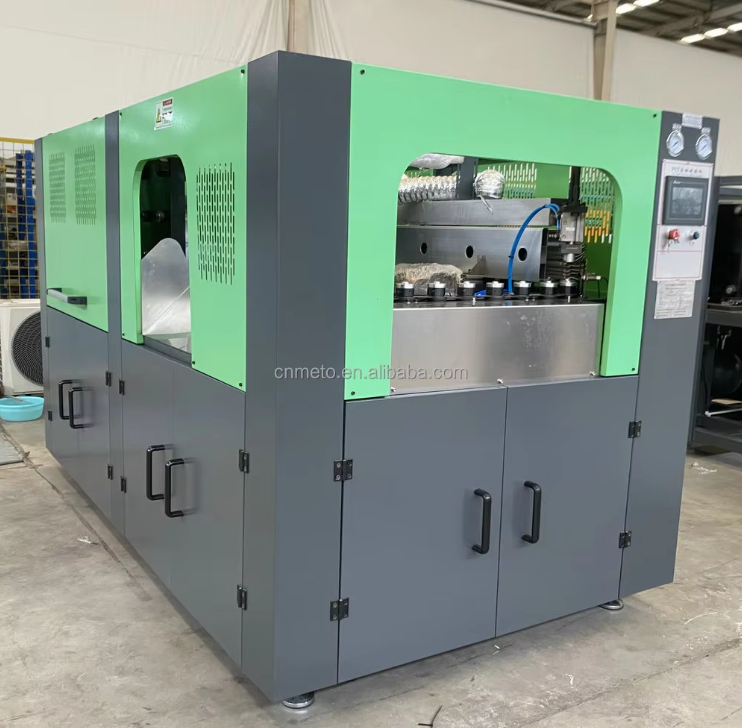
Part 1: Steel Selection — The Foundation of Mold Life
Every durable mold starts with the right steel. Meto does not use generic "tool steel." Instead, we match the steel grade to the specific application, production volume, and material being blown.
1.1 Criteria for Blow Mold Steel Grade Selection
When choosing a blow mold steel grade, Meto engineers evaluate:
Required hardness (wear resistance)
Toughness (resistance to cracking)
Thermal conductivity (cooling efficiency)
Corrosion resistance (for PET or acidic products)
Polishability (for high-gloss bottles)
Machinability (for complex cooling channels)
1.2 Standard Steel Grades Used by Meto
| Steel Grade (DIN) | Hardness (HRC) | Best For |
|---|---|---|
| 1.2311 (P20) | 30–36 | Prototype molds, low-volume production |
| 1.2343 (H11) | 46–52 | High-volume PET preform molds |
| 1.2767 | 50–54 | Extreme wear resistance, long-run extrusion blow molds |
| 1.4112 (stainless) | 50–55 | Corrosive materials, food-contact bottles |
| 1.2083 (420 stainless) | 48–52 | High-gloss cosmetic bottles |
1.3 Why Steel Grade Matters for a Durable Blow Mold
A mold made from 1.2311 may cost less initially, but it will show wear after 500,000 cycles. In contrast, a Meto mold using 1.2343 with proper heat treatment can exceed 5 million cycles without significant wear. The right blow mold steel grade reduces total cost per bottle by extending productive life.
1.4 Incoming Steel Inspection
Every steel block entering Meto's facility undergoes:
Spectrometer analysis (chemical composition verification)
Ultrasonic testing (internal flaws)
Hardness measurement (as-received condition)
Only certified material with traceable mill certificates enters our production floor.
Part 2: Rough Machining and Stress Relieving
Steel as received contains internal stresses from the rolling or forging process. If these stresses are not removed, the mold will distort during final machining or in service.
2.1 Rough Machining
Meto first rough machines the mold blocks to within 1–2mm of final dimensions. This removes the outer layer and exposes any hidden defects.
2.2 Stress Relieving
After rough machining, the mold components undergo a stress-relieving heat treatment:
Temperature: 500–650°C (depending on steel grade)
Soak time: 2–4 hours
Slow furnace cooling
This step reduces residual stresses by 80–90%, ensuring dimensional stability during finish machining and in production.
Part 3: Precision Machining and Cooling Channel Fabrication
With stress-relieved blanks, Meto proceeds to precision machining.
3.1 5-Axis CNC Machining
Meto uses 5-axis CNC machining centers to achieve:
Cavity tolerances of ±0.01mm
Surface finishes as fine as Ra 0.2μm
Complex 3D contours for ergonomic bottle shapes
3.2 Conformal Cooling Channels
Unlike straight drilled holes, Meto's conformal cooling channels follow the bottle profile. This is achieved through:
Direct metal laser sintering (for complex channels)
Or precision drilling with angled intersections
Uniform cooling directly correlates with mold durability. Hot spots cause localized wear and premature cracking. Meto's cooling design eliminates these hot spots.
3.3 Pilot Hole Preparation for Heat Treatment
Before heat treatment, Meto leaves 0.3–0.5mm of stock on critical surfaces. This allows for final finishing after hardening, correcting any minor distortion.
Part 4: Heat Treatment — The Core of Mold Durability
Heat treatment transforms a soft, machinable steel into a hard, wear-resistant working surface. Meto operates its own in-house vacuum heat treatment facility, ensuring full control over every batch.
4.1 The Vacuum Heat Treating Process
Vacuum heat treating offers distinct advantages over conventional atmosphere furnaces:
No oxidation or decarburization
Bright, clean surfaces
Uniform temperature distribution
Precise cycle control
The vacuum heat treating sequence for a typical blow mold steel grade (e.g., 1.2343):
| Step | Temperature | Duration | Purpose |
|---|---|---|---|
| Preheating | 650°C | 30 min | Gradual thermal soak |
| Austenitizing | 1020–1050°C | 45–60 min | Dissolve carbides |
| High-pressure gas quenching | N₂ at 5–10 bar | Rapid cooling | Form martensite |
| First temper | 560–580°C | 2 hours x 2 cycles | Reduce brittleness |
| Second temper | 540–560°C | 2 hours | Achieve final hardness |
4.2 Achieving Target Hardness
After vacuum heat treating, Meto achieves:
1.2343: 48–52 HRC
1.2767: 50–54 HRC
1.2083: 48–52 HRC
Hardness is verified on every cavity using a Rockwell tester. Rejected components are re-heat-treated or scrapped — never passed to the customer.
4.3 The Nitriding Process for Enhanced Surface Wear Resistance
For blow molding machine molds processing abrasive materials (glass-filled plastics, high-speed PET), Meto offers plasma nitriding.
The nitriding process:
Temperature: 480–520°C
Atmosphere: nitrogen-hydrogen plasma
Case depth: 0.1–0.3mm
Surface hardness: 900–1100 HV (equivalent to 65–70 HRC)
Nitriding creates a hard, slippery surface that resists galling, scratching, and adhesive wear. Importantly, the core remains tough, preventing crack propagation.
4.4 PVD Coating for Molds (Optional Enhancement)
For extreme applications, Meto applies PVD coating for molds — typically TiN, CrN, or AlTiN.
Benefits of PVD coating:
Coefficient of friction reduced to 0.3–0.4
Surface hardness up to 3000 HV
Chemical inertness (resists PET oligomers)
Improved bottle release (reduced ejector pin marks)
While not required for every mold, PVD coating can double the life of a durable blow mold in harsh conditions.
Part 5: Final Finishing and Quality Control
After heat treatment and any secondary surface treatments, the mold returns for final finishing.
5.1 Wire EDM and Sinker EDM
EDM (Electrical Discharge Machining) creates sharp internal corners, venting slots, and pinch-off edges that cannot be milled. Meto uses CNC-controlled EDM with wear compensation.
5.2 Polishing and Texturing
Mechanical polishing up to mirror finish (Ra 0.05μm)
Chemical or laser texturing for matte or branded surfaces
Proper polishing reduces melt adhesion and cleaning frequency.
5.3 Final Dimensional Inspection
Every cavity is measured using a CMM (coordinate measuring machine). Critical dimensions checked include:
Cavity diameter and ovality
Neck finish thread profile
Pinch-off edge sharpness
Cooling channel flow rate (pressure test)
5.4 Trial Molding
Before shipment, Meto mounts each mold on an actual blow molding machine and produces sample bottles. This validates:
Ejection reliability
Cooling uniformity (thermal imaging)
Part quality (wall thickness, clarity, flash)
Only molds that pass trial molding are packaged for delivery.
Part 6: How Meto's Manufacturing System Translates to Customer Benefits
Understanding the technical details is valuable, but customers care about results. Here is how each step of Meto's system benefits your production line.
| Manufacturing Step | Customer Benefit |
|---|---|
| Correct steel grade | Longer mold life, predictable wear |
| Stress relieving | No distortion, stable dimensions |
| Conformal cooling | Faster cycles, fewer rejects |
| Vacuum heat treating | Consistent hardness, no surface decarb |
| Nitriding / PVD | Extreme wear resistance, reduced cleaning |
| Final inspection + trial | Plug-and-play installation, no surprises |
Together, these steps create a durable blow mold that runs reliably for millions of cycles, with lower scrap rates and fewer unscheduled stops.
Part 7: Common Failure Modes — And How Meto Prevents Them
To appreciate Meto's system, it helps to understand how molds from less rigorous suppliers fail.
| Failure Mode | Root Cause | Meto Prevention |
|---|---|---|
| Cavity cracking | Improper tempering, residual stress | Double temper, stress relieving |
| Pinch-off wear | Low hardness, no nitriding | 48+ HRC + plasma nitriding |
| Cooling corrosion | Wrong steel grade | Stainless steel or coating |
| Dimensional drift | No stress relief | Stress relieving after rough machining |
| Galling (sticking) | Rough surface, no coating | High polish + optional PVD |
Meto's manufacturing system systematically eliminates these failure modes.
Part 8: Comparison — Meto vs. Standard Mold Manufacturing
| Feature | Standard Mold Supplier | Meto |
|---|---|---|
| Steel inspection | Visual only | Spectrometer + ultrasonic |
| Stress relieving | Often skipped | Always performed |
| Cooling channels | Straight drilled | Conformal where beneficial |
| Heat treatment | Outsourced, uncontrolled | In-house vacuum furnace |
| Hardness testing | Spot check | Every cavity |
| Surface treatment | None | Nitriding or PVD optional |
| Trial molding | Rarely | Every mold |
This comparison explains why Meto molds consistently outlast standard tooling by 2–3 times in real production environments.
Part 9: Application-Specific Steel and Heat Treatment Recommendations
Different bottle applications demand different approaches. Meto provides application-specific guidance.
9.1 PET Preform Molds (Injection Stretch Blow Molding)
Recommended steel: 1.2343 (H11)
Hardness: 48–50 HRC
Treatment: Vacuum heat treat + nitriding
Why: Combines toughness (for clamping forces) with wear resistance (for preform neck rings)
9.2 Extrusion Blow Molds (Oil, Detergent, Large Containers)
Recommended steel: 1.2767
Hardness: 50–54 HRC
Treatment: Vacuum heat treat + optional PVD coating for molds
Why: Pinch-off edges require extreme hardness and sharpness
9.3 High-Gloss Cosmetic Bottle Molds
Recommended steel: 1.2083 (420 stainless)
Hardness: 48–52 HRC
Treatment: Vacuum heat treat + mirror polishing
Why: Corrosion resistance and polishability are critical
9.4 Multi-Cavity High-Volume Molds
Recommended steel: 1.2343 or 1.2767
Hardness: 50–52 HRC
Treatment: Vacuum heat treat + nitriding process
Why: Consistent performance across all cavities for millions of cycles
Part 10: Maintenance Tips to Extend Mold Life Further
Even the most durable blow mold benefits from proper care. Meto recommends:
Regular cleaning – Remove polymer residues before they carbonize
Lubricate moving parts – Guide pins, ejector plates, slide mechanisms
Check cooling channels – Flush periodically to remove scale
Inspect pinch-off edges – Minor wear can be re-polished
Store molds properly – Rust-preventative coating and controlled humidity
Following these practices can add 20–30% to mold lifespan beyond the baseline durability.
Conclusion: The Meto Difference — A Complete Durability System
Mold durability is not a single attribute. It is the sum of deliberate choices: the right blow mold steel grade, stress relieving, precision machining, in-house vacuum heat treating, surface enhancement via nitriding or PVD coating for molds, rigorous inspection, and trial molding.
Meto has built a manufacturing system that integrates every one of these steps. We do not cut corners. We do not outsource critical processes. And we do not ship a mold until it has proven itself in trial production.
When you invest in a durable blow mold from Meto, you are not buying a component. You are buying millions of reliable cycles, lower scrap rates, and predictable production costs.
Whether you need blow molding machine molds for PET preforms, extrusion blow molds for industrial containers, or custom bottle mold designs with demanding surface finishes, Meto's manufacturing system delivers the durability your production line deserves.

Ruby
We can provide you with high-quality PET preform molds,cap molds,and blow molding machines.Looking forward to communicating and cooperating with you!
Helpline and Support
008613757660057